Hello, I’m Hirossy.
When I watch movies and dramas from other countries, I often see children going to school by school bus.
For me, those yellow school buses feel very “foreign school life.”
So, what is school life like in Japan?
Of course, it depends on the school, area, and family.
But Japanese elementary schools have some customs and habits that feel very Japanese.
In this article, I would like to gently introduce Japanese school life from the point of view of an ordinary Japanese dad.
- Conclusion: Japanese School Is Not Only for Studying
- Many Children Walk to School
- School Lunch Is a Big Memory for Many Japanese People
- Sports Day Is a Big School Event for Families Too
- Japanese School Life Can Be Busy Too
- A Gentle Tip for People Interested in Japanese School Life
- Summary: Japanese School Life Has Small Pieces of Everyday Culture
Conclusion: Japanese School Is Not Only for Studying
Japanese school life is not only about studying.
Of course, taking classes is important.
But children also eat school lunch, clean the school, and join school events like sports day.
At school, children spend time with their friends and slowly learn how to live together in a group.
For people from other countries, some things may feel surprising.
“Do children walk to school by themselves?”
“Do they eat lunch at school?”
“Do students clean the school?”
In Japan, these things are often a normal part of school life.
Many Children Walk to School
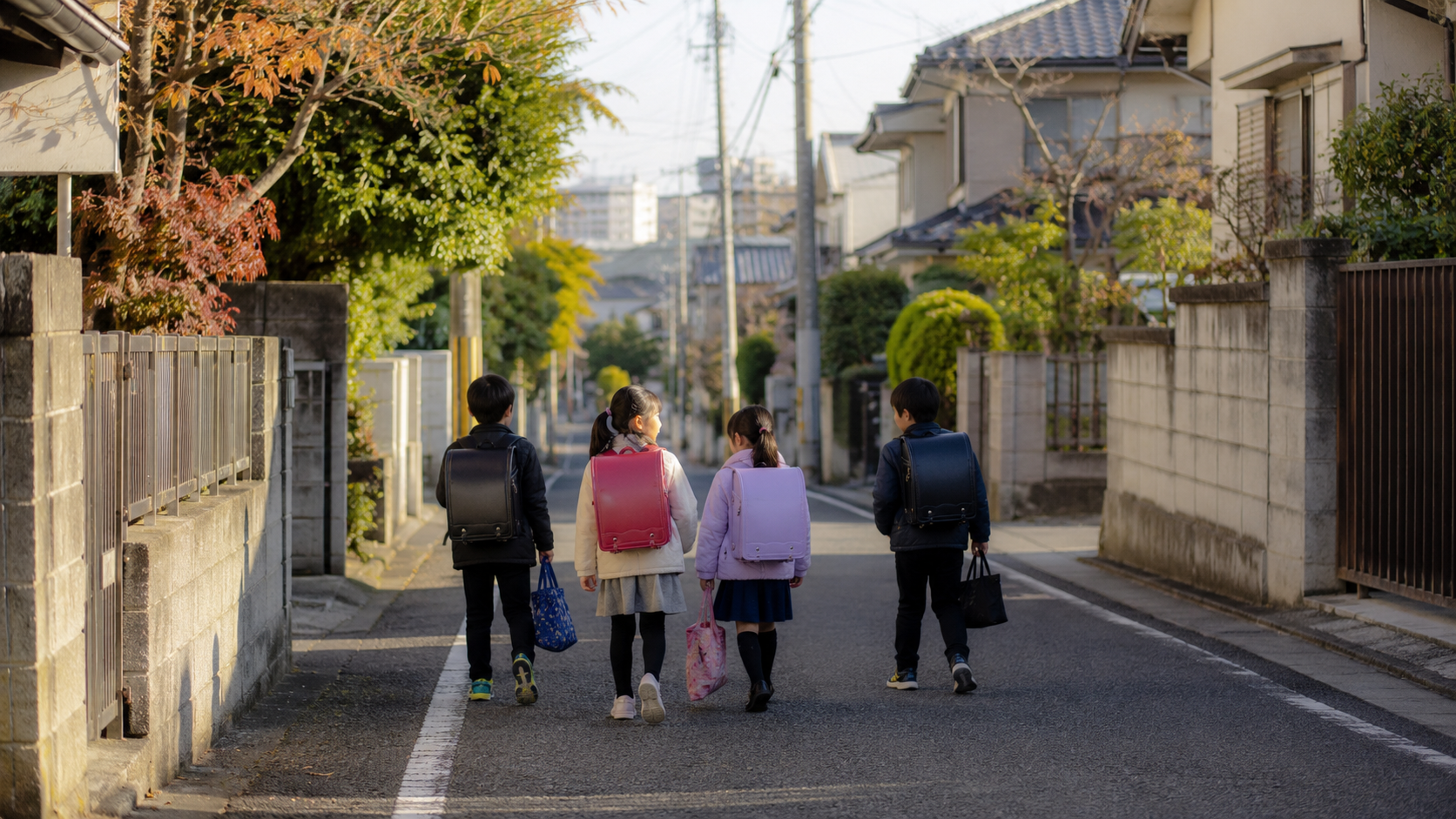
One thing that may surprise people from other countries is that many Japanese children go to school by themselves.
When I watch American movies, I often see children going to school by school bus.
But in Japan, especially for elementary school students, many children walk to school from their homes.
In some areas, children walk together in a group.
This is sometimes called a “school walking group.”
Of course, this is not the same everywhere.
If the school is far away, some children may use a bus or train.
Some parents may also take their children to school.
Even so, in Japan, it is common to see children walking in the morning with their randoseru backpacks.
For Japanese people, this is a very normal scene.
But for people from other countries, it may look a little surprising.
School Lunch Is a Big Memory for Many Japanese People
One big memory of Japanese school life is school lunch.
In Japanese, school lunch is called “kyushoku.”
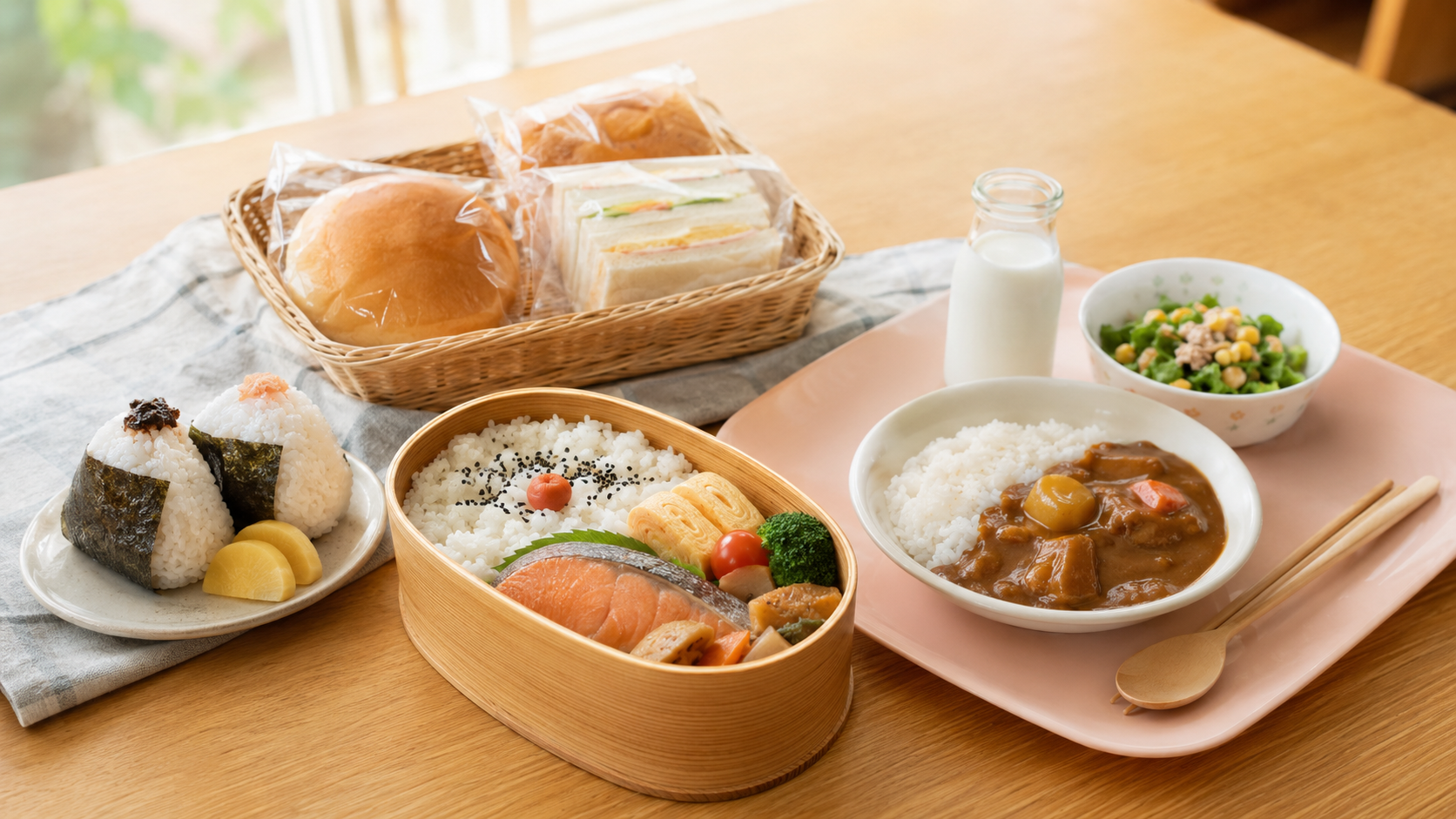
At many elementary schools in Japan, children eat lunch at school.
They usually eat in the classroom with their teacher and classmates.
Even after we become adults, we sometimes talk about school lunch.
“What was your favorite school lunch?”
“I liked soft noodles.”
“I miss koppepan bread.”
Soft noodles are soft noodles often served at school lunch.
Children usually ate them with meat sauce or soup.
For many Japanese people, they are a nostalgic school lunch memory.
Koppepan is also a classic school lunch bread.
It is a simple bread, but many people remember it from their childhood.
There is also something called “Milmake.”
Milmake is a powder or liquid that you put into milk to change the flavor.
There are flavors like coffee and strawberry.
It made school milk a little more fun.
In Japan, people also sometimes talk about school milk.
“Was your milk in a paper carton?”
“No, mine was in a glass bottle.”
This is a very common school lunch memory topic in Japan.
It is a small thing, but people who grew up in the same time or area can get very excited about it.
Sports Day Is a Big School Event for Families Too
In Japanese schools, sports day is also a big event.
On sports day, children are often divided into two teams: the red team and the white team.
They join many different events, such as:
- rolling a big ball
- throwing balls into a basket
- short races
- relay races
- dancing or group performances
Rolling a big ball is an event where children roll a large ball as a team.
Throwing balls into a basket is also a common sports day event in Japan.
Both are familiar events at Japanese school sports days.
For me, the most exciting event is the relay race by the oldest students.
In elementary school, this means the sixth graders.
In junior high school, it means the third-year students.
The oldest students run very seriously, and the families and teachers cheer loudly.
Sports day is not only a memory for children.
It is also a big memory for parents.
Japanese School Life Can Be Busy Too
Japanese school life has many fun parts, but as a parent, I sometimes feel that it can be hard too.
One example is summer vacation homework.
In Japan, summer vacation is often more than one month long, depending on the area.
For children, a long vacation is very exciting.
But many schools also give a lot of homework.
There may be workbooks, book reports, science projects, picture diaries, crafts, and more.
In my family, we once had a big problem with summer vacation homework.
I asked my child,
“Did you finish your homework?”
My child said,
“Yes, I finished it.”
So I felt relieved.
But on the last day of summer vacation, we found out that many things were not finished.
After that, our house became very busy.
In the end, my child cried while finishing homework late at night.
As a parent, I felt a little sorry.
At the same time, I thought,
“I should have checked it earlier.”
I think this kind of summer homework problem happens in many Japanese families.
A Gentle Tip for People Interested in Japanese School Life
When you look at Japanese school life, I think it is better not to think, “All Japanese schools are like this.”
Schools, areas, and times are different.
For example, school lunch is different depending on the area.
The way children go to school can be different in cities and countryside areas.
Sports day is also changing. Some schools make it shorter because of hot weather.
Even so, I think Japanese schools often have this kind of feeling:
Children spend time together.
Children learn how to cooperate through events.
Children also learn daily habits through school life.
If you visit Japan and see children walking with randoseru backpacks, I hope you can think,
“Ah, this is also a part of everyday life in Japan.”
Summary: Japanese School Life Has Small Pieces of Everyday Culture
Japanese school life is not only about studying.
School lunch, walking to school, sports day, and summer vacation homework are all part of children’s everyday life.
Inside these small daily things, there are many parts of Japanese culture.
Even after becoming adults, many Japanese people enjoy talking about soft noodles, koppepan bread, and Milmake from school lunch.
When I see children running hard at sports day, I feel moved as a parent.
And sometimes, the whole family becomes busy because of summer vacation homework.
Japanese school life is not always perfect or easy.
But maybe those busy and imperfect parts are also part of real Japanese school life.
I hope this article helps you feel a little closer to everyday school life in Japan.
Comments