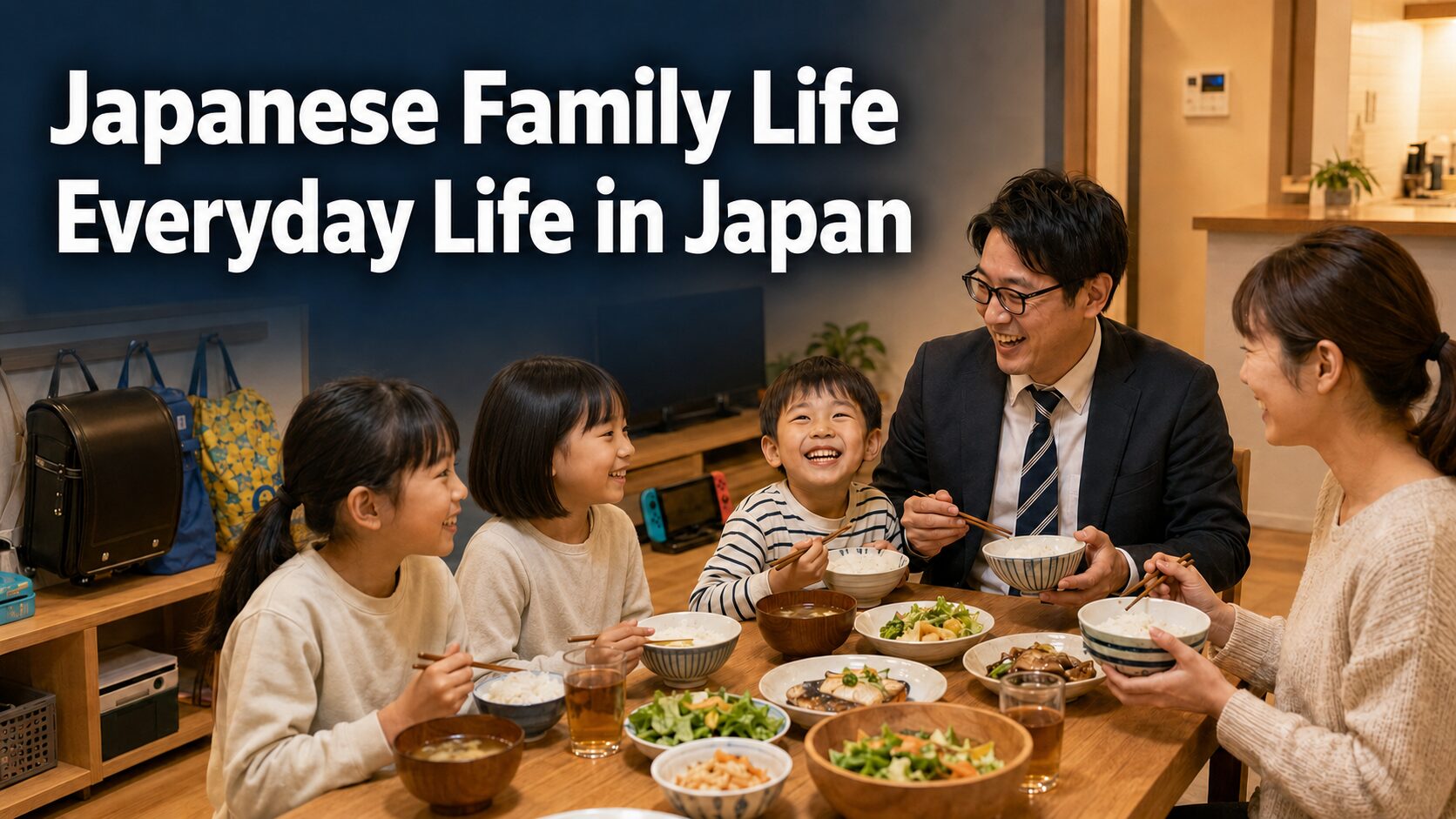
What is everyday family life like in Japan?
There is no single answer because every family is different.
Some parents work from home. Some work long hours outside the home. Some families live with grandparents, while others live as parents and children only.
So instead of pretending that my family represents everyone in Japan, I would like to show you one real example.
I am Hirossy, a Japanese father raising three children while working at a manufacturing company.
Our weekdays are busy. Our weekends are usually simple. We do not visit famous tourist attractions every week.
Most of the time, we go to swimming lessons, shop at AEON, watch YouTube, or play games together.
It may not sound very special.
But this is what family life in Japan looks like for us.
- A Typical Weekday for a Japanese Family
- Our Family Time Usually Starts at 8:00 p.m.
- How Japanese Families Spend Their Weekends
- Parenting and Family Time in Japan
- Five Family Members Playing Minecraft Together
- Japanese Parents Do Not Always Have Much Free Time
- Is Every Japanese Family the Same?
- Where Can Visitors See Everyday Family Life in Japan?
A Typical Weekday for a Japanese Family
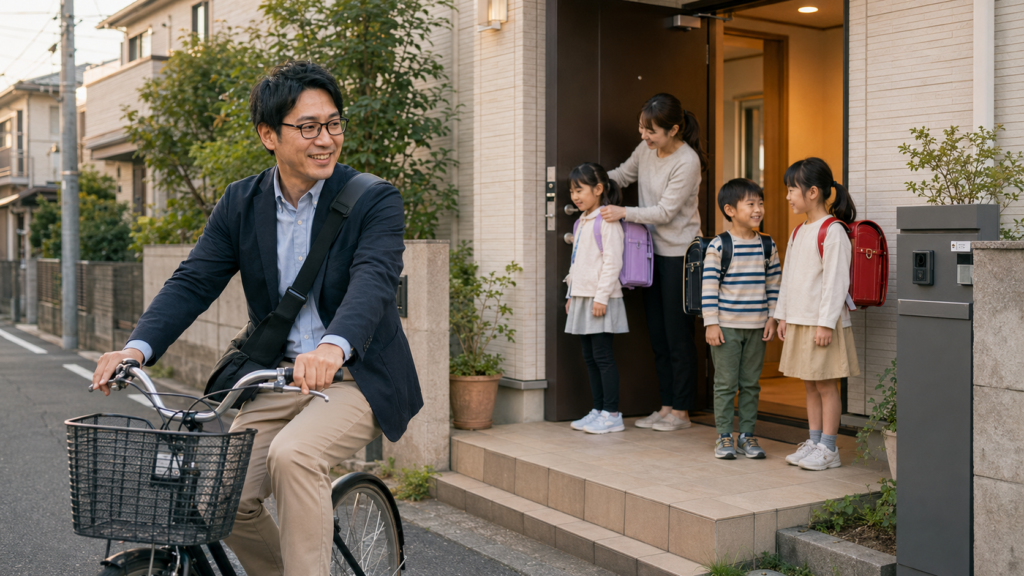
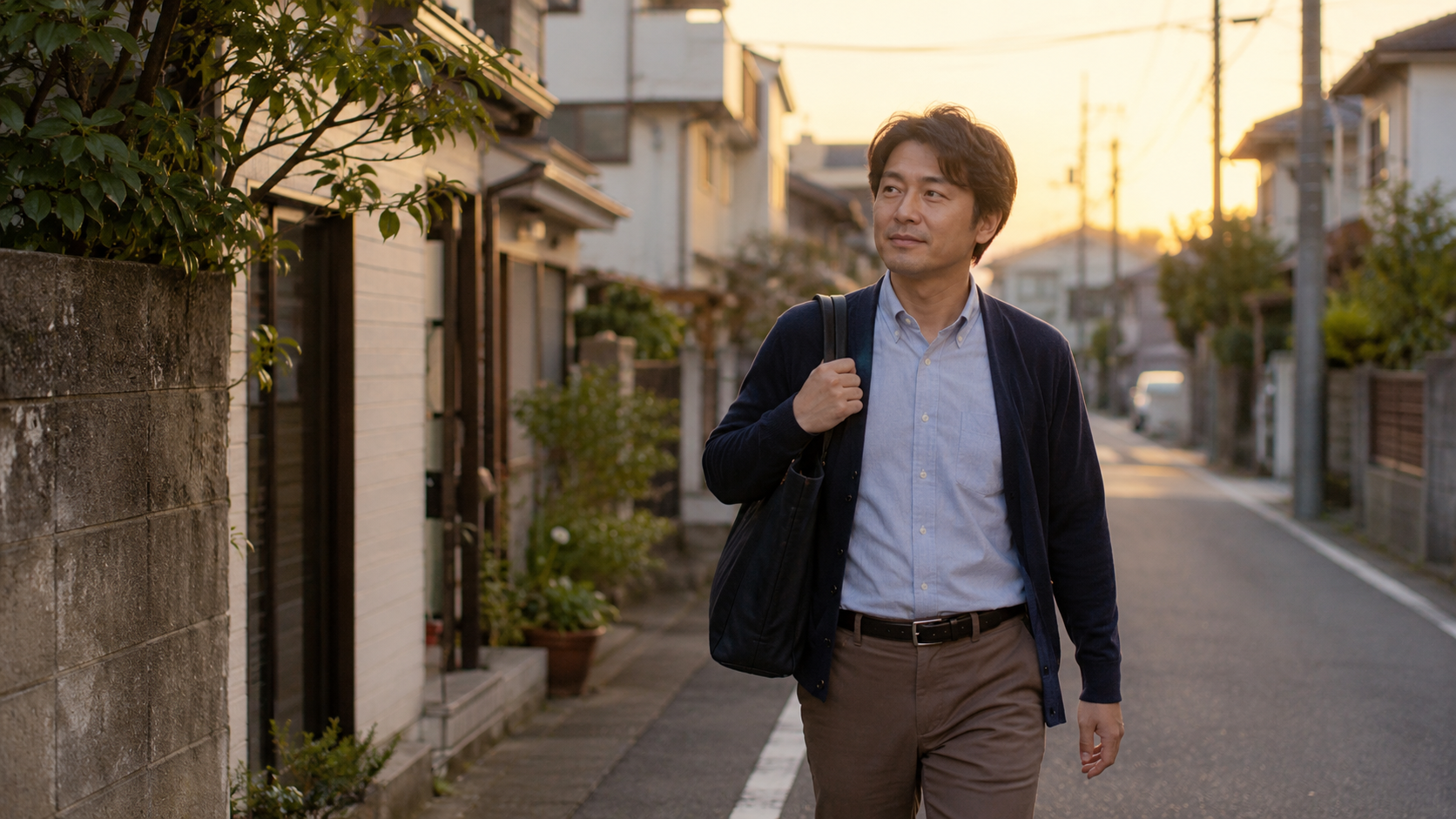
On weekdays, I leave home at around 7:00 in the morning.
My workplace is about 30 minutes away by bicycle.
I have been riding a bicycle to school or work since I was a teenager, so I am used to it. It saves money on gasoline, and it also gives me some exercise.
At least, that is what I tell myself.
Recently, there have been more mornings when the pedals feel unusually heavy.
I would like to blame the wind.
Unfortunately, it may also be my age.
My work starts at 8:00 a.m. and usually finishes at around 7:00 p.m.
Working long hours is not the same for every company or every worker in Japan. However, my schedule is one reason I have limited time with my family on weekdays.
If you would like to know more about working hours, workplace relationships, and the reality of being an office worker in Japan,
you can also read my article about Japanese work culture.
While I am working, my children spend their day at school. They study, eat lunch, and spend time with their classmates.
School life in Japan includes more than classroom lessons. Children also clean parts of their school, eat lunch together, and take part in school events.
For a closer look at their daily routine, see my guide to Japanese school life.
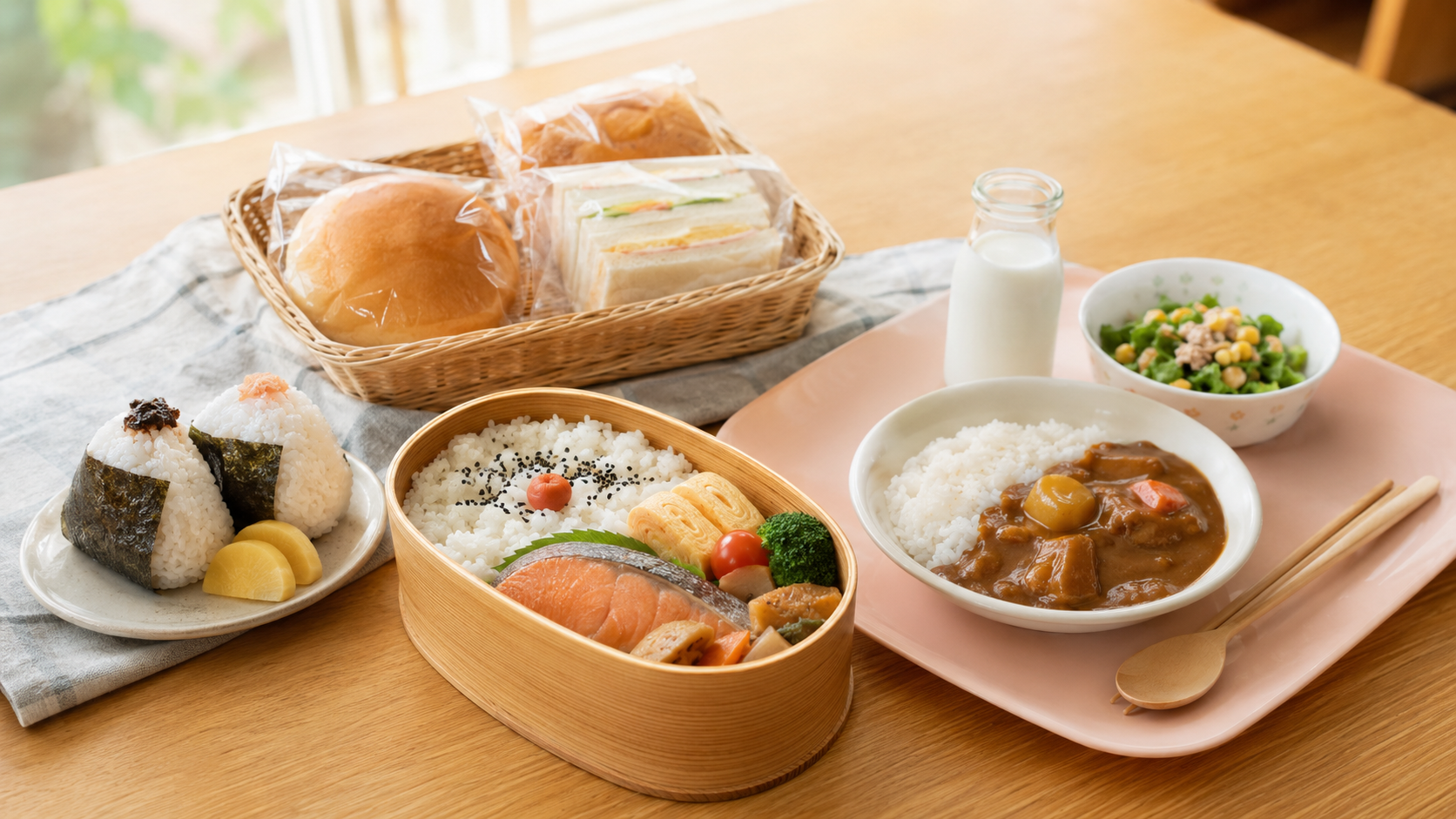
School lunch is also an important part of the day for many children. The menu, serving system, and experience can be quite different from what visitors expect.
I explain more about this in my article on Japanese lunch culture.
By the time I finish work and cycle home, it is usually around 8:00 p.m.
That means my time with the children on weekdays is quite short.
Our Family Time Usually Starts at 8:00 p.m.
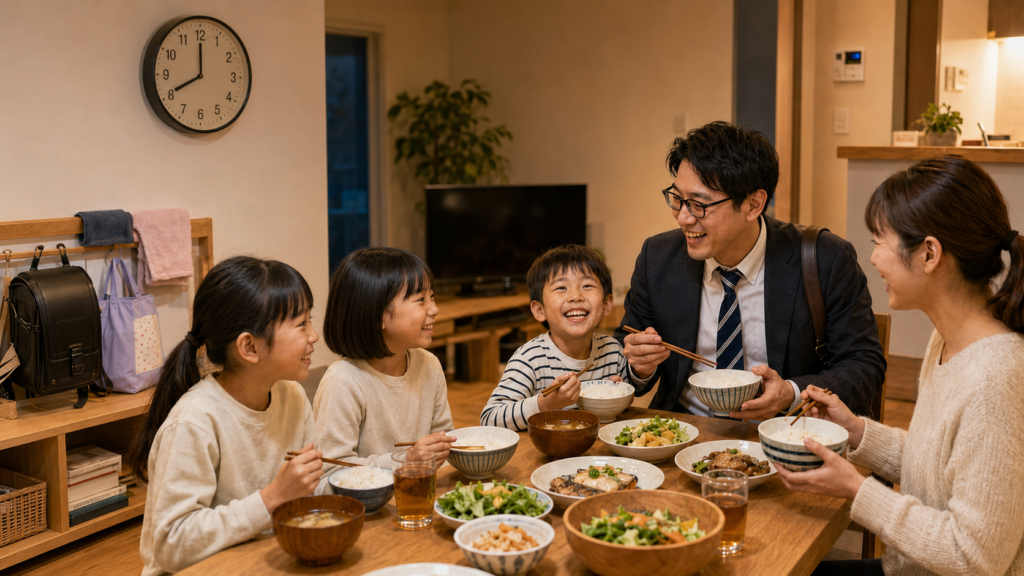
When I arrive home, the children have often already taken a bath or started getting ready for bed.
We usually eat dinner together, and this is one of the few times when the whole family can sit in the same place on a weekday.
The children sometimes tell us what happened at school or what they did with their friends.
However, dinner ends quickly.
After I eat, take a bath, and finish what I need to do, it is often already around 9:00 p.m.
That is the children’s bedtime.
Sometimes it feels as if I have only just come home, but the day is already over.
I would like to spend more time talking or playing with them, but weekdays do not always work the way I want.
This is one reason I look forward to the weekend.
How Japanese Families Spend Their Weekends
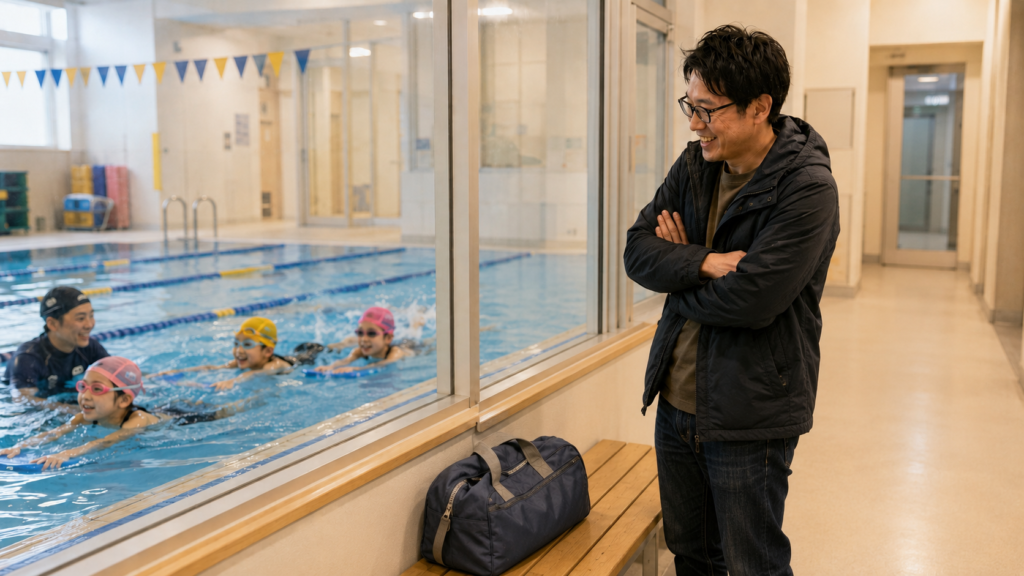
Saturday is often swimming lesson day for our children.
We take them to the swimming school and watch them practice.
After that, we may go shopping or return home, depending on how tired everyone is.
On Sundays, we often visit AEON, a large shopping mall found in many parts of Japan.
We buy groceries, look around the stores, and sometimes eat at the food court.
For visitors, going to a shopping mall may not sound like an exciting Japanese experience.
There are no temples, castles, or beautiful gardens.
There is usually just a supermarket, clothing stores, restaurants, families pushing shopping carts, and children asking their parents to buy something.
In other words, it is very normal.
But that is exactly why places like AEON show a real part of Japanese family life.
Of course, we do not go out every weekend.
Sometimes everyone is tired, and we stay at home.
I am quite good at forgetting about work during my days off. People have sometimes told me that I switch off quickly.
But after spending most of the week at work, I think forgetting about it for a while is probably healthy.
Parenting and Family Time in Japan
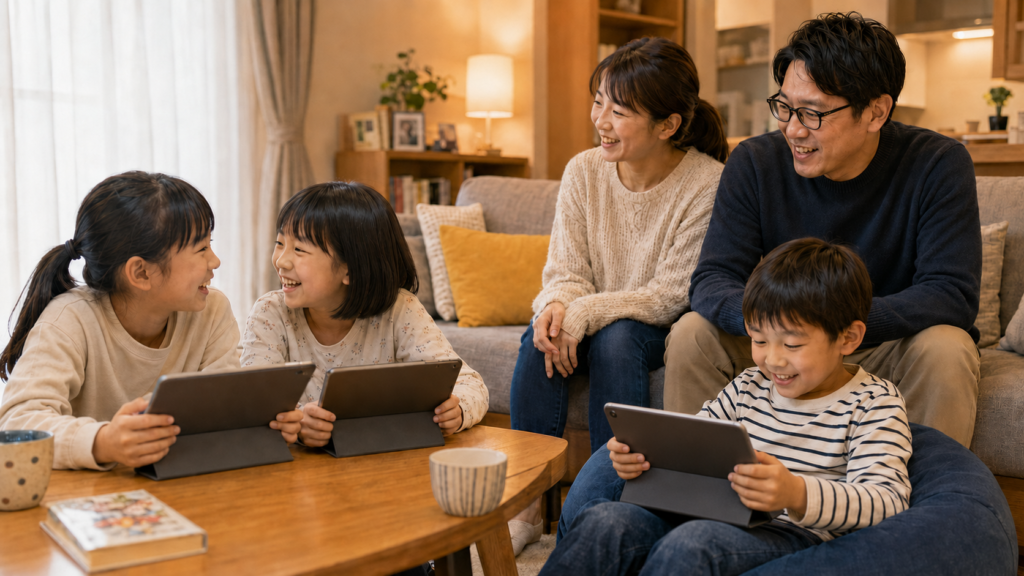
The way children spend their free time has changed a lot since I was young.
When I was a child, meeting friends usually meant going outside and playing together in person.
My children still play outside, but they also enjoy YouTube, Netflix, tablets, Roblox, and online conversations with friends.
Sometimes they talk with friends on LINE while playing a game together.
When I first saw this, it felt a little strange.
They were each sitting in their own homes, but they were still laughing and playing together.
Then I realized that this is simply normal communication for their generation.
We still need to think about screen time and internet safety. However, I do not think every activity involving a screen is automatically bad.
Sometimes games create family time too.
Five Family Members Playing Minecraft Together
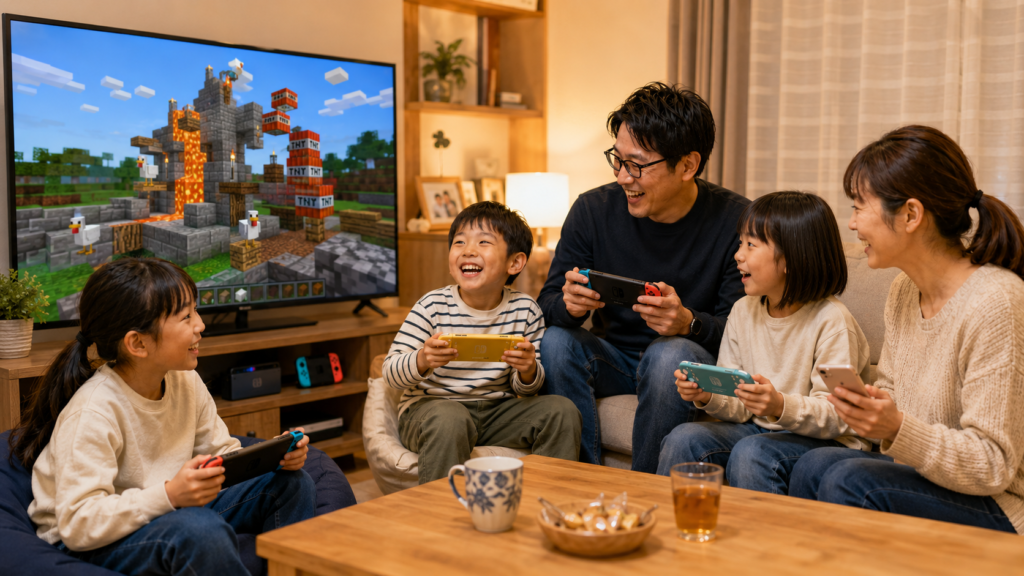
Recently, our whole family played Minecraft in the same world.
We have two Nintendo Switch consoles and two Nintendo Switch Lite consoles. My wife joined from her smartphone.
That gave us five players.
Preparing five devices already felt like a small family event.
A few days earlier, we had taken a trip to Shizuoka. Since it was a long drive, I rented six DVDs from GEO for the children to watch in the car.
I thought they would watch several different movies.
They watched A Minecraft Movie about three times.
The other five DVDs barely had a chance.
After we came home, I kept thinking about the Lava Chicken Machine from the movie.
When someone pulls the lever, a chicken appears inside the machine. Then lava falls from above and cooks it.
It is a clever machine.
It is also slightly terrible when you explain it like that.
Still, I thought:
“My children will probably like this.”
I found a tutorial on YouTube and built the machine in our Minecraft world.
My son immediately started pulling the lever again and again.
Each time he pulled it, a chicken appeared inside the machine, and lava poured down from above.
He laughed every single time.
My wife saw the machine and had a completely different reaction.
“What a cruel game. Those poor chickens.”
My son saw a fun machine that made cooked chicken.
My wife saw innocent chickens suddenly appearing just before lava fell on them.
Once she said it, I had to admit that the machine did look a little disturbing.
My son was not concerned.
After using the machine enough times, he moved on to placing TNT everywhere.
Within a few minutes, he had changed from a chicken farmer into the god of destruction.
It was not quite the peaceful family Minecraft session I had imagined.
But everyone seemed to be enjoying the game in their own way.
Japanese Parents Do Not Always Have Much Free Time
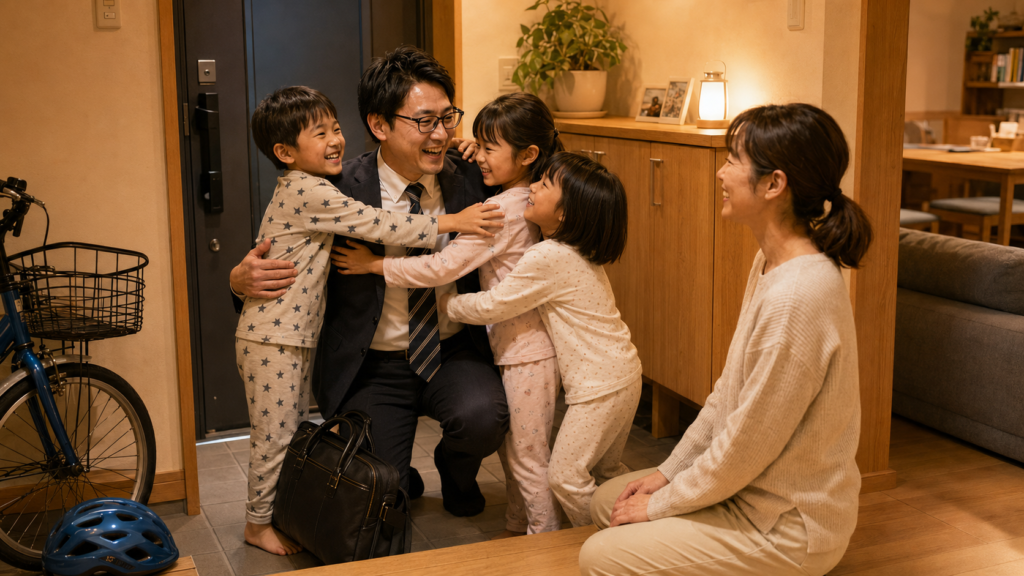
One challenge for me is finding enough time with my children.
I work until around 7:00 p.m., and I usually arrive home at around 8:00 p.m.
By then, the children’s day is almost finished.
This does not mean that every Japanese father has the same schedule.
Some parents come home earlier. Some work later. Some work shifts, and some work from home.
For me, however, family time on weekdays is limited.
That makes ordinary moments more important.
Eating dinner together.
Listening to a short story about school.
Watching the children at swimming lessons.
Walking around AEON.
Trying to build something in Minecraft before my son destroys it with TNT.
These are not major events, but they are the main parts of our family life.
Is Every Japanese Family the Same?
No.
My family is only one example.
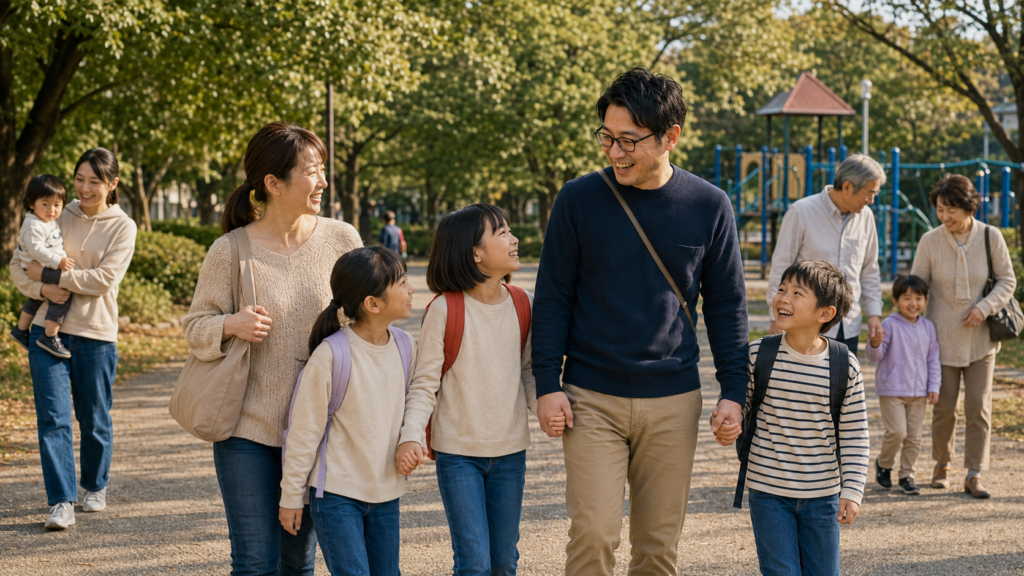
Family life in Japan changes depending on many things, including:
- Where the family lives
- The parents’ jobs
- The children’s ages
- School and activity schedules
- Whether grandparents live nearby
- The family’s interests and personality
Some families travel often.
Some spend most weekends at home.
Some children have several lessons or club activities, while others have more free time.
There is also no single correct way for Japanese fathers and mothers to divide work, housework, and childcare.
Even within the same family, routines change as the children grow.
That is why I do not want readers to think, “All Japanese families live like Hirossy’s family.”
A better way to think about it is:
“This is one real Japanese family’s everyday life.”
Where Can Visitors See Everyday Family Life in Japan?
When you visit Japan, famous tourist destinations are worth seeing.
But you can also learn about Japanese daily life by visiting ordinary places.
Try walking through:
- A local supermarket
- A neighborhood park
- A family restaurant
- A shopping mall
- A food court
- A train station on the weekend
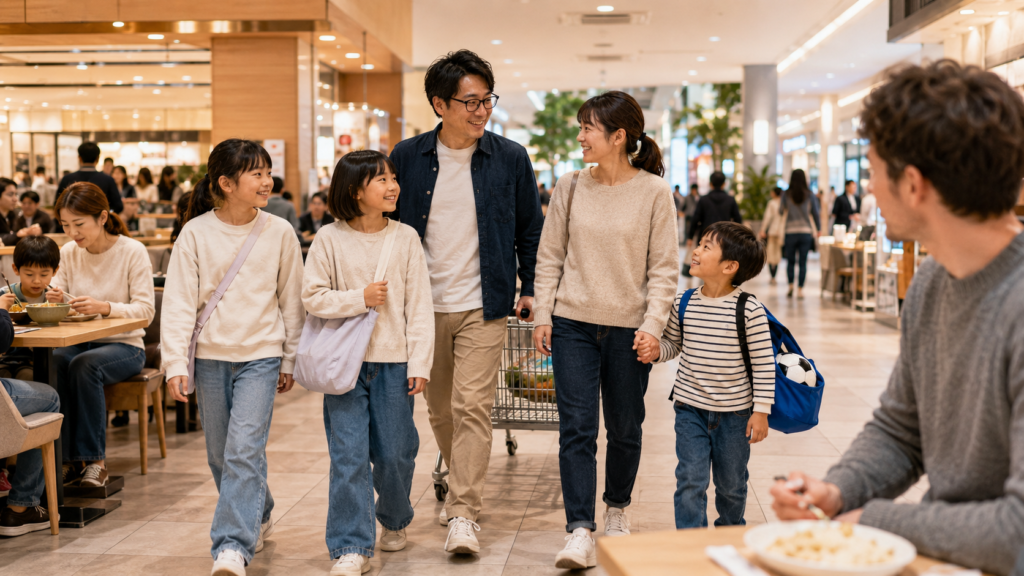
You may see parents shopping with their children, families eating together, or children on their way to sports lessons.
Train stations and trains are also places where you can observe part of everyday Japanese life.
People often speak quietly, avoid loud phone calls, and try not to disturb the people around them.
For more about this part of daily life,
read my article on why Japanese trains are so quiet.
These scenes may look ordinary.
They are ordinary.
But they are also a real part of living in Japan.
Our family life is busy on weekdays and fairly simple on weekends.
We work, go to school, eat dinner, attend swimming lessons, visit AEON, watch videos, and play games.
And occasionally, a family Minecraft session ends with digital chickens appearing inside a machine, lava falling from above, and TNT destroying the neighborhood.
That is our family life in Japan right now.
Comments