Hello, I’m Hirossy.
Some people from other countries who are interested in Japanese food culture may wonder:
“What do Japanese people eat for lunch?”
“What are Japanese bento and school lunches like?”
Japanese lunch culture has many styles.
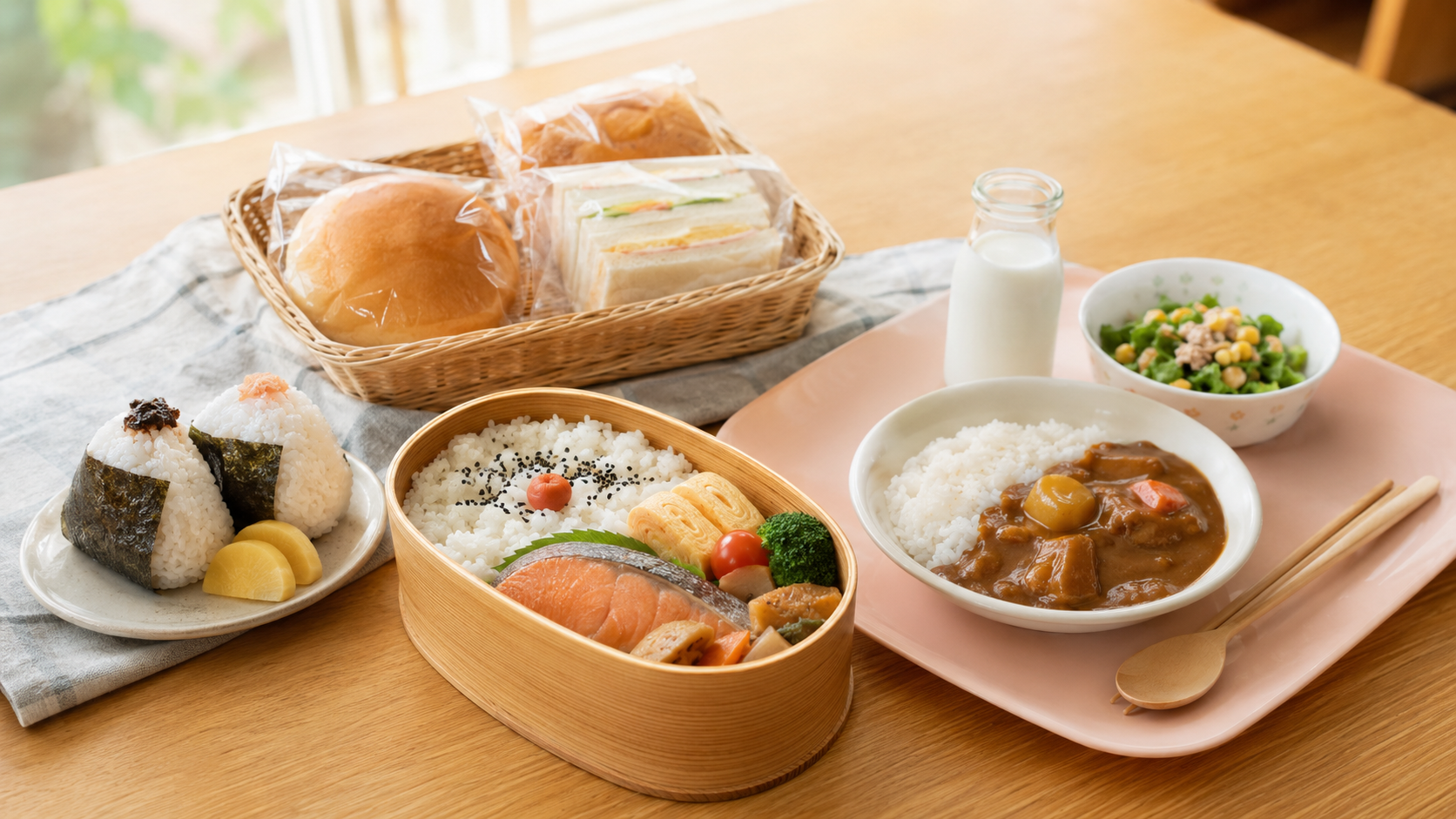
There are homemade bento, school lunches, and convenient lunches from convenience stores.
As an ordinary Japanese dad, I often buy bread from a convenience store when I eat lunch at work.
When I eat lunch at home on weekends, I often eat cup noodles or instant noodles.
In this article, I will gently introduce Japanese lunch culture in a simple way.
- Conclusion: Japanese Lunch Is a Mix of Convenience and Home Life
- Bento: Japanese Lunch Boxes
- School Lunch in Japan
- Convenience Store Lunch in Japan
- Lunch at Home Is Often Simple
- How to Enjoy Lunch When Traveling in Japan
- Friendly Advice for People from Other Countries
- Conclusion: Japanese Lunch Shows Everyday Life
Conclusion: Japanese Lunch Is a Mix of Convenience and Home Life
If I explain Japanese lunch culture simply, I think it is a mix of convenience and home life.
Homemade bento often includes family care and small daily ideas.
School lunch is a culture where children eat the same meal together.
Convenience store lunch is useful for busy people who want to eat quickly and easily.
Of course, not all Japanese people eat beautiful bento every day.
On busy days, many people buy lunch at a convenience store.
At home, some people eat cup noodles for a simple meal.
Japanese lunch culture is not always something special.
It is very close to everyday life.
Bento: Japanese Lunch Boxes
One well-known part of Japanese lunch culture is bento.
Bento means a Japanese lunch box.
It is a meal packed in one box, usually with rice, side dishes, vegetables, eggs, meat, or fish.
People eat bento at school, at work, on school trips, on sports days, and when they go out.
Some people overseas may imagine very beautiful bento, colorful lunch boxes, or cute character bento.
Yes, those bento exist.
But many everyday bento are more simple and normal.
For example, a common bento may include:
- rice
- rolled omelet
- sausages
- frozen side dishes
- cherry tomatoes
- fried chicken
These are common foods in Japanese family bento.
Making bento every morning can be very hard.
So many families use frozen foods or put leftovers from dinner into the bento.
For people from other countries, I think it is good to see Japanese bento not only as “perfect food art,” but also as a practical and warm meal from daily family life.
School Lunch in Japan
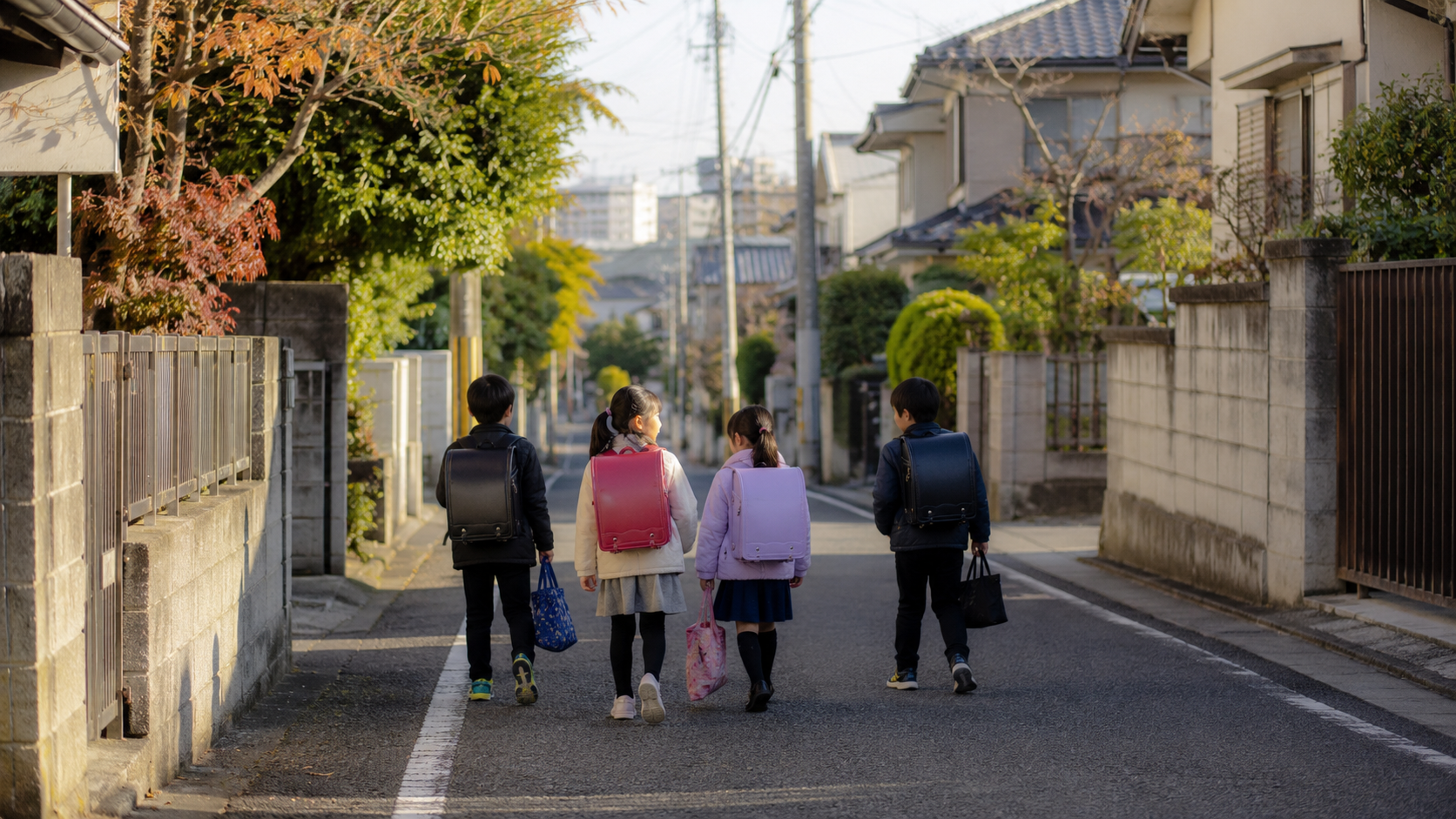
In many Japanese elementary schools, children eat school lunch.
In Japanese, school lunch is called kyushoku.
Children usually eat the same lunch together in the classroom.
One special point about Japanese school lunch is that children often help serve the food.
It depends on the school and area, but children on lunch duty may wear white aprons and caps.
They serve food to their classmates.
School lunch is not only a time to eat.
It can also be a time to learn things like:
- being thankful to the people who prepare food
- working together
- taking care of food
The school lunch menu is different depending on the school and area.
Some days have rice.
Some days have bread.
There may be curry, udon, fish, vegetables, milk, and many other foods.
Of course, every child has favorite and least favorite school lunches.
Japanese school lunch has many good points, but it does not mean every child loves it every day.
Still, school lunch is an important memory for many Japanese people.
Even after becoming adults, Japanese people sometimes talk about school lunch like this:
“What school lunch did you like when you were a child?”
“Was your milk in a glass bottle or a paper carton?”
For many Japanese people, these topics feel a little nostalgic.
Convenience Store Lunch in Japan
Another part of Japanese lunch culture that I want people from other countries to know is convenience store lunch.
Japanese convenience stores have many foods for lunch.
For example:
- onigiri rice balls
- sandwiches
- bento
- pasta
- yakisoba
- bread
- salad
- soup
- hot snacks
Convenience store bento has many kinds, and many of them taste good.
For busy office workers and students, convenience stores are very useful.
I also often buy bread from a convenience store when I eat lunch at work.
It is easy to buy and quick to eat, so it helps me on busy days.
However, convenience store lunch is very convenient, but if you care about nutrition, eating it too often may not be the best idea.
Many products are tasty, but it can be easy to eat too much fried food or carbohydrates.
Of course, if you add salad or soup, it can become more balanced.
So, I think Japanese convenience store lunch is convenient and delicious, but it is also good to think about balance if you eat it often.
Lunch at Home Is Often Simple
When people think of Japanese food culture, they may imagine sushi, tempura, ramen, or beautiful Japanese set meals.
But normal lunch at home can be much simpler.
On weekends, some families cook a proper lunch.
But some days, they make something easy.
In my case, when I eat lunch at home on weekends, I often eat cup noodles or instant noodles.
I also like cup yakisoba.
There are many kinds, but for me, UFO is my favorite.
For ramen, I like Chicken Ramen.
This may sound very ordinary.
But in real Japanese homes, people do not cook beautiful Japanese meals every time.
Some days are busy.
Some days we are tired.
Some days we are busy with children’s plans.
That is why instant foods and convenience store foods are also part of Japanese daily life.
Japanese lunch culture is not only traditional Japanese food.
If you also look at these simple everyday foods, Japanese lunch may feel more real.
How to Enjoy Lunch When Traveling in Japan
If you travel to Japan, there are many ways to enjoy lunch.
You can eat at a restaurant.
You can also buy an ekiben, a lunch box sold at train stations.
Some ekiben include local foods from that area.
You can also buy onigiri or bento at a convenience store and eat it at your hotel or in a park.
But when you eat outside, it is good to pay a little attention to the place.
In Japan, people do not often eat while walking in some places.
Of course, in some tourist areas or at festivals, eating while walking is normal.
But on trains or busy streets, many people do not eat.
If you are not sure, looking for a bench or rest area is a good idea.
Friendly Advice for People from Other Countries
When you learn about Japanese lunch culture, please enjoy it casually.
If you go to a Japanese convenience store, just looking at the onigiri, sandwiches, and bento area can be fun.
There are many kinds, so you may think, “Wow, they even have this!”
If you see a bento, try to notice not only how it looks, but also the daily life and small ideas behind it.
If you learn about Japanese school lunch, you can also understand a little more about children’s school life in Japan.
But Japanese lunch culture has many different styles.
It depends on the family and the area.
Some people eat homemade bento every day.
Some people buy lunch at convenience stores.
Some people use company cafeterias.
Some people eat simple cup noodles at home.
So instead of thinking, “All Japanese people do this,” I hope you can think,
“There are many styles of lunch in Japan.”
Conclusion: Japanese Lunch Shows Everyday Life
Japanese lunch culture includes bento, school lunch, convenience store lunch, instant foods, and many other styles.
Bento shows family ideas and care.
School lunch shows the culture of eating together.
Convenience store lunch helps people in busy daily life.
And ordinary Japanese dads like me sometimes eat convenience store bread at work, or cup yakisoba and Chicken Ramen at home on weekends.
Japanese lunch is not only a special culture.
It is very close to everyday life.
I hope this article helps you feel Japanese lunch culture a little closer.
Comments