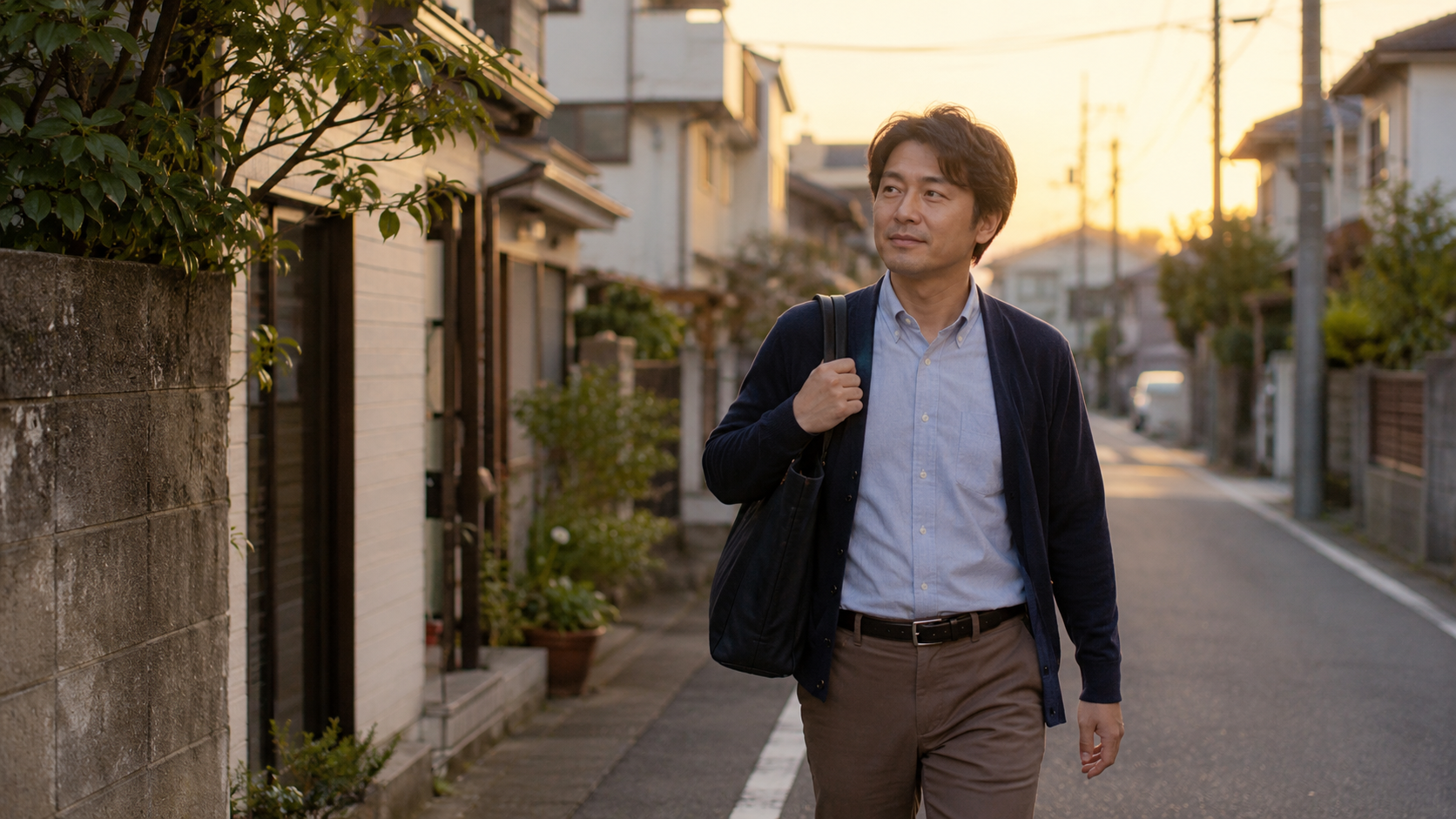
Hello, I’m Hirossy.
Some people from other countries may wonder:
“What is Japanese work culture really like?”
“Do Japanese people really work long hours?”
“Are workplace relationships in Japan difficult?”
Japanese work culture often has an image of being serious, punctual, and team-oriented.
In many ways, this image is true.
But from the point of view of an ordinary Japanese worker, there are both good sides and difficult sides.
In this article, I would like to share a realistic and friendly view of Japanese work culture, from my perspective as an ordinary Japanese dad.
- Conclusion: Japanese Work Culture Is Serious and Careful, But It Can Also Be Tiring
- Being on Time Is Very Important in Japan
- Long Working Hours Are Often Discussed in Japan
- Relationships with Bosses and Senior Coworkers Are Also Important
- Sometimes Human Relationships Are Harder Than the Work Itself
- Japanese Work Culture Also Has Good Points
- Advice for People Who May Work in Japan
- Understanding Japanese Work Culture Helps You Understand Daily Life in Japan
- Conclusion: Japanese Work Culture Has Both Seriousness and Difficulty
Conclusion: Japanese Work Culture Is Serious and Careful, But It Can Also Be Tiring
If I explain Japanese work culture in one simple phrase, I would say it is:
“A culture where people work seriously and cooperate with others.”
In many Japanese workplaces, people value being on time, taking responsibility, and not causing trouble for others.
These can be good things.
Work can be done carefully, and people often try to support the team.
But there are also difficult sides.
Some people work long hours.
Some people feel pressure in relationships with bosses or senior coworkers.
Some people feel stress from workplace relationships.
Of course, every company is different.
Recently, more companies in Japan are trying to improve working styles.
So, not every workplace in Japan is the same.
But as one ordinary person working in Japan, I feel that Japanese work culture has both good points and hard points.
Being on Time Is Very Important in Japan
One important part of Japanese work culture is being on time.
Starting time, meeting time, and deadlines are often taken very seriously.
For example, if work starts at 8:00 a.m., many people do not arrive exactly at 8:00.
They often come a little earlier and get ready before work begins.
This is a common feeling in many Japanese workplaces.
People from other countries may wonder:
“Work starts at 8:00, so why do people come earlier?”
In Japan, some workplaces think it is important to be ready to start working at the starting time.
Of course, this depends on the workplace.
These days, more people also think that working hours should be respected properly.
But even now, being on time and not making others wait are still very important in many Japanese workplaces.
Long Working Hours Are Often Discussed in Japan
When people talk about Japanese work culture, long working hours are often mentioned.
In my own life, I spend many hours on work during weekdays.
My weekday is usually like this.
I wake up at 6:00 in the morning.
I start work at 8:00.
I finish work around 7:00 in the evening.
I get home around 8:00 at night.
After that, I eat dinner and take a bath.
Then I work on my blog or study on my computer.
I usually go to bed around 1:00 a.m.
When I look at this schedule, I feel that I do not have much relaxed time with my family on weekdays.
I think many working fathers and mothers in Japan may understand this feeling.
Of course, not all Japanese people live like this.
Some companies have little overtime.
Some companies allow remote work or flexible working hours.
But I think there are still workplaces in Japan where long working hours can easily become normal.
Relationships with Bosses and Senior Coworkers Are Also Important
In Japanese workplaces, relationships with bosses and senior coworkers are often important.
In Japanese, we have the words senpai and kohai.
Senpai means someone who joined the company or school before you.
Kohai means someone who joined after you.
These words are often used in schools, but they are also used in companies.
In Japanese workplaces, people often use polite language with bosses and senior coworkers.
They also try not to be rude.
This can be a good culture because it shows respect for others.
But sometimes, people may become tired because they have to be careful too much.
For example, you may want to say your opinion, but it may feel hard to say it to your boss.
You may have a question about the way a senior coworker does something, but it may feel difficult to speak strongly.
In Japanese workplaces, work skills are important.
But I also feel that building good relationships with people around you is very important.
Sometimes Human Relationships Are Harder Than the Work Itself
There is something I often feel from working.
For me, one of the most important things at work may be human relationships.
Of course, the work itself is not always easy.
Sometimes it is physically tiring.
Sometimes there are many things to learn.
There is also responsibility.
But in many cases, once you get used to the work, you can manage it little by little.
However, when human relationships at work become bad, it can become a very big source of stress.
You may not get along well with someone at work.
You may feel uncomfortable talking to your boss or coworkers.
You may feel tired because you always have to be careful around others.
When this happens, the problem is not only the work itself.
Going to the company every day can become painful.
I do not think this is only a Japanese problem.
Human relationships are important in every country.
But in Japanese workplaces, people often work as a team and value harmony with others.
So I feel that workplace relationships can have a very big effect on daily work life.
Japanese Work Culture Also Has Good Points
So far, I have talked about some difficult parts.
But Japanese work culture also has good points.
For example, many people work seriously.
They try to be on time.
They try to keep promises.
They check small details carefully.
They try to cooperate with the team.
I think these are good parts of Japanese work culture.
Some people from other countries may feel that Japanese shops and services are very polite.
One reason may be that many workers think:
“I do not want to cause trouble for the customer.”
“I want to do my job properly.”
However, behind this polite service, there is also effort and pressure from workers.
When people say Japanese service is amazing, I feel happy.
But I also think it is important to remember the people who support that service.
I hope those workers are not pushing themselves too hard.
Advice for People Who May Work in Japan
If you are from another country and want to work in Japan, I think the first important thing is to remember that every workplace is different.
Even in Japan, some companies have a traditional style.
Other companies have a more relaxed and flexible style.
Foreign companies, IT companies, factories, restaurants, schools, hospitals — each workplace can have a very different culture.
Still, there are some things that may help in many Japanese workplaces.
First, being on time is important.
If you prepare a little early, people may feel more comfortable and trust you more.
Second, it is usually good to be polite at first.
In Japan, being a little careful and polite at the beginning may feel safer than being too friendly too quickly.
Third, if you do not understand something, it is better to ask early.
In Japan, there is a phrase called kuuki wo yomu.
It means “reading the air.”
It means trying to understand the mood of the situation and the feelings of others.
But this can be difficult for people from other countries.
Actually, it can also be difficult for Japanese people.
So if you are not sure, you do not have to understand everything by yourself.
You can ask:
“Excuse me, can I confirm something?”
Even for me, as a Japanese person, reading the mood is not always easy.
Sometimes I also wonder what the best thing to do is.
Understanding Japanese Work Culture Helps You Understand Daily Life in Japan
Japanese work culture is closely connected to daily life in Japan.
For example, some people come home late because of work.
Some people feel tired after work.
Some people do not have much time with their families on weekdays.
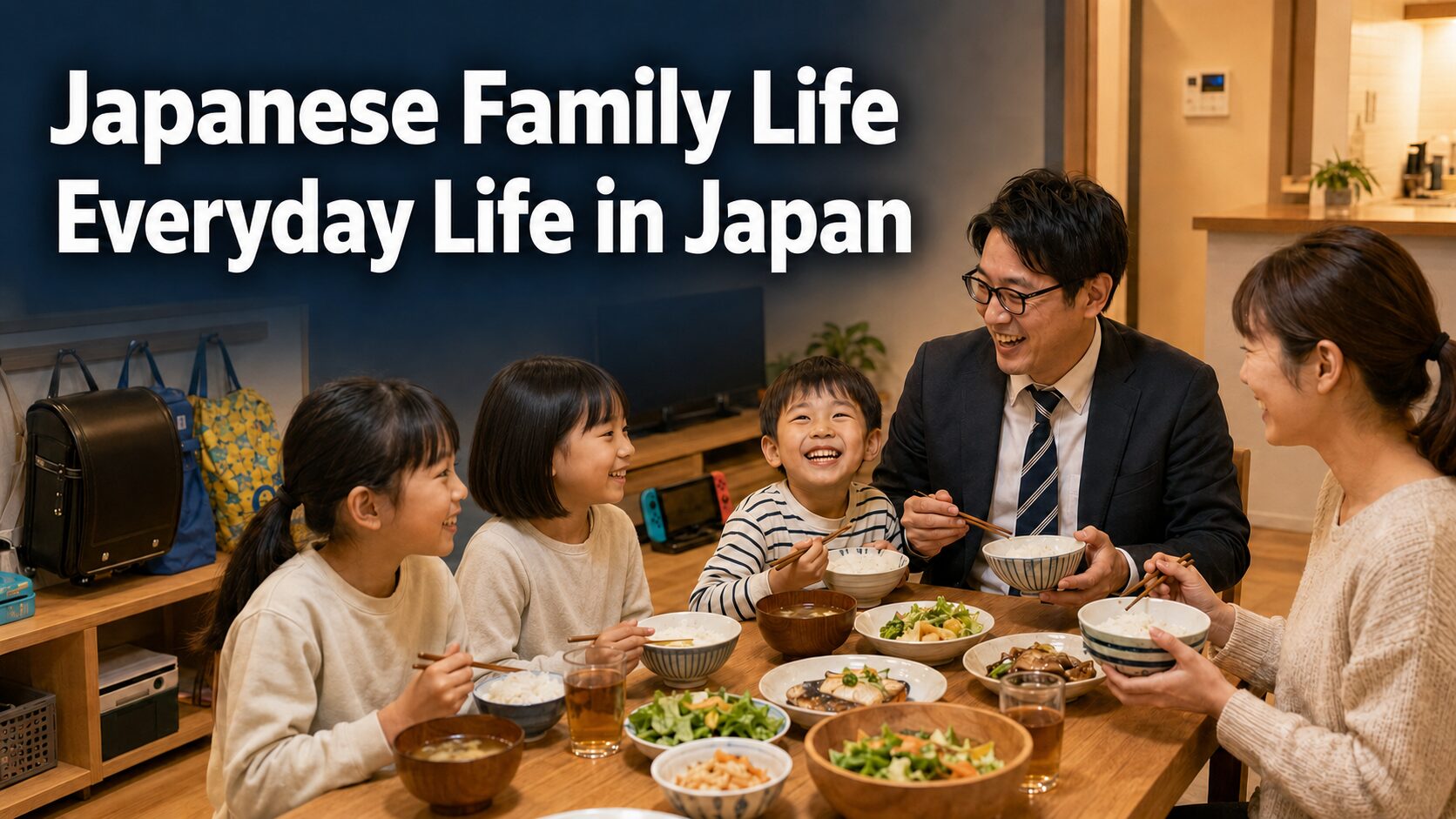
As an ordinary Japanese dad, I also think a lot about how to make time for my family and for myself while working.
Learning about Japanese work culture is not only about companies.
It also helps you understand the daily rhythm of Japanese people.
It shows how people think about family, stress, responsibility, seriousness, and effort.
From outside Japan, Japanese people may look very serious.
But behind that seriousness, some people may also be trying too hard.
That is why more people in Japan are now thinking about better ways to work.
Conclusion: Japanese Work Culture Has Both Seriousness and Difficulty
Japanese work culture has both good sides and difficult sides.
Being on time.
Taking responsibility.
Cooperating as a team.
Respecting bosses and senior coworkers.
These are important parts of Japanese work culture.
At the same time, long working hours and stress from human relationships can also be difficult.
As an ordinary Japanese dad, I do not think Japanese work culture is perfect.
But I do think many people in Japan work seriously and try hard every day.
I would be happy if people from other countries could understand this a little.
By learning about Japanese work culture, Japan may feel a little closer to you.
And maybe you can also understand the everyday lives of Japanese people a little better.
Comments