Hello, I’m Hirossy.
One of the things that often surprises people from other countries when they visit Japan is this:
“Japan feels so safe.”
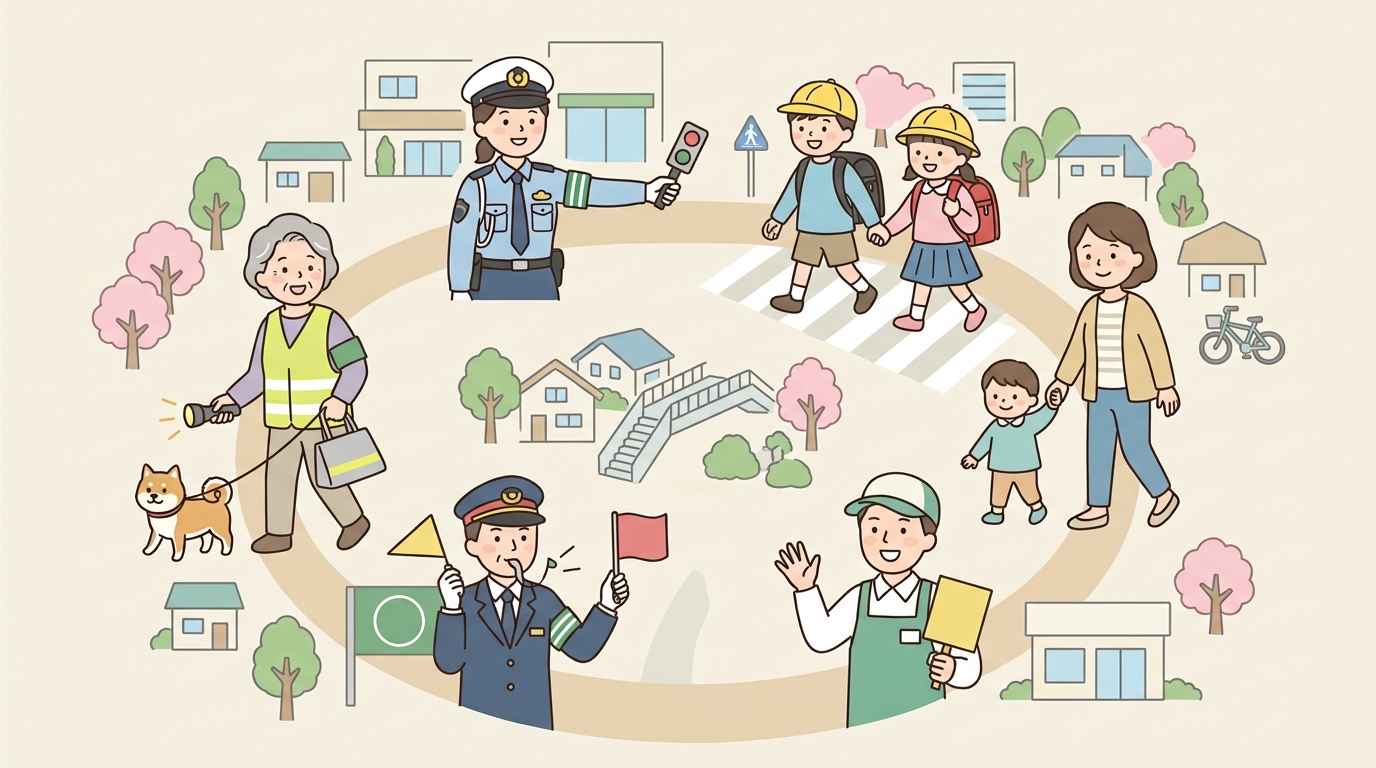
It is true that in Japan, you can often see children going to school by themselves or playing in parks.
Sometimes, lost items are even brought to a police box.
But Japan is not safe simply because “Japanese people are especially amazing.”
I believe Japan’s safety is created by many things working together: the police, schools, families, local communities, and the rules of society as a whole.
In this article, as a father of three living in Japan, I would like to gently explain why Japan is often said to be safe, in a way that even middle school students can understand.
- Conclusion: Japan’s Safety Is Created by a Shared Sense of Responsibility
- Reason 1: Police Boxes Are Close to Everyday Life
- Reason 2: Children Learn Rules from a Young Age
- Reason 3: Communities Help Watch Over Children
- Reason 4: Lost Items Sometimes Come Back
- Reason 5: The Eyes of Other People Help Create Safety
- But Japan Is Not a Perfectly Safe Country
- What I Do to Help Keep My Children Safe
- Conclusion: Japan’s Safety Is Created by Everyone
Conclusion: Japan’s Safety Is Created by a Shared Sense of Responsibility
Japan is relatively safe, but it is not only because of the police.
Of course, the police play a very important role.
But beyond that, there is a general feeling throughout society—in families, schools, neighborhoods, shops, train stations, companies, and local communities—that says:
“Let’s follow the rules.”
“Let’s try not to bother other people.”
“If someone is in trouble, let’s help them.”
In other words, Japan’s safety is not created by one single “magic” reason.
It is created by many different systems and habits working together, such as police boxes, community watch activities, rules taught at school and work, order in cities, and the way people behave in public.
Reason 1: Police Boxes Are Close to Everyday Life
In Japan, there are small police stations called koban.
You can often find them near train stations or in local neighborhoods.
If you get lost, lose something, or have a problem, you can go there and ask for help.
I think the existence of koban is one of the big reasons Japan feels safe.
A large police station may feel a little far away or difficult to enter.
But a koban feels much closer to everyday life.
There is a sense of security in knowing:
“If something happens, I can go to the koban.”
Reason 2: Children Learn Rules from a Young Age
In Japan, children are taught rules from a young age.
At school, children learn things like:
“Wait your turn.”
“Do not take things that belong to other people.”
“Help someone if they are in trouble.”
“Follow traffic rules.”
The same is true at home.
In my family, I teach my children to come home before it gets dark and not to run out into the road.
Recently, my oldest daughter started riding a bicycle more often.
So at first, I rode with her around our neighborhood and taught her traffic rules while we practiced together.
As a parent, I still feel a little worried.
But I believe these small lessons, one by one, help protect children’s safety.
Reason 3: Communities Help Watch Over Children
In Japan, many elementary school children go to and from school in groups.
Older students sometimes look after younger children, and people from neighborhood associations or local community groups may stand near intersections to help keep children safe.
I think this is a very Japanese way of protecting children.
Children are not protected only by their parents.
In many places, the whole community helps watch over them.
Of course, this does not happen in exactly the same way everywhere in Japan.
But I believe this culture of watching over children is an important part of Japan’s safety.
Reason 4: Lost Items Sometimes Come Back
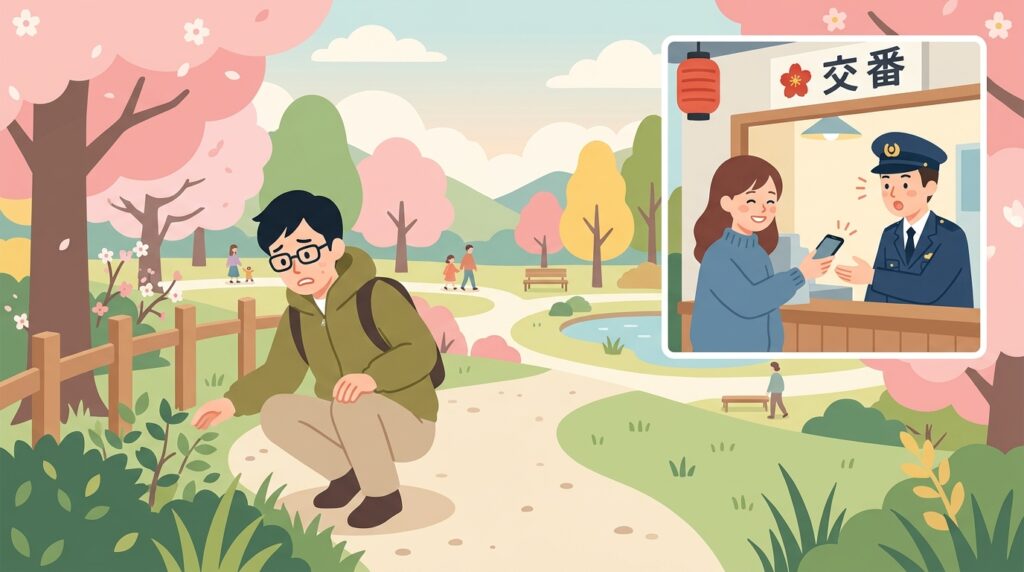
One thing that often surprises people about Japan is that lost items may come back.
Of course, this does not always happen.
But wallets, smartphones, and other lost items are sometimes brought to a koban.
In my own family, there was a time when my oldest daughter lost her iPhone while playing with her friends at a park.
Modern iPhones are expensive, so honestly, I felt pretty hopeless.
“There’s no way this is coming back…”
That was what I thought as I went to the park to look for it.
But I could not find it.
While I was searching, my wife called the koban to ask if anyone had turned it in.
And amazingly, the iPhone had already been brought there.
The last time our child called us from the iPhone was around 5:30 p.m.
It was brought to the koban around 6:00 p.m.
In only about 30 minutes, someone had picked it up and taken it to the police box.
I was truly surprised.
At the same time, I felt:
“I’m really grateful for this part of Japan.”
Reason 5: The Eyes of Other People Help Create Safety
In Japan, there are many “eyes” in the community.
Schools, train stations, convenience stores, parks, neighbors, and local watch activities.
Someone might be watching.
I think this feeling helps create an atmosphere where it is harder to do bad things.
This does not feel exactly like being watched or controlled.
It feels more like:
“People in society are looking out for one another.”
Of course, not everything is perfect.
But in Japan, I think the eyes of people around us and connections within the community often help support safety.
But Japan Is Not a Perfectly Safe Country
This is an important point.
Japan is often said to be safe, but it is not a country with no crime at all.
On the news, we still hear about traffic accidents, child abuse, bullying-related suicides, murder cases, and other serious problems.
Recently, crimes connected to what is called yami baito, or “dark part-time jobs,” have also become a problem.
There are also some areas that are said to be less safe than others.
For example, in recent years, the area in Tokyo known as Toyoko has sometimes appeared in the news.
I do think Japan is a relatively safe country.
But that does not mean:
“Everywhere in Japan is absolutely safe.”
As a parent, I worry a lot about things like traffic accidents, suspicious strangers, social media, and bullying.
Recently, depending on the area, there have even been reports of bears appearing near communities.
Even in Japan, a country often described as safe, we still need to be careful.
What I Do to Help Keep My Children Safe
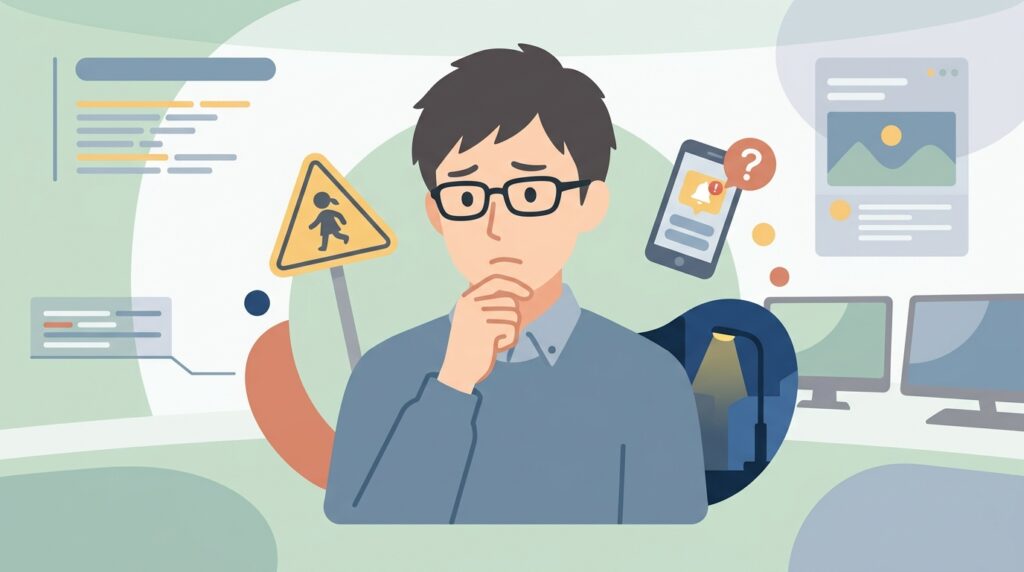
In Japan, elementary school children are sometimes given personal safety alarms.
These alarms make a loud sound when something happens, so children can call for help from people nearby.
In my family, I tell my children:
“Come home before it gets dark.”
“Do not follow strangers.”
“Do not run out into the road.”
“Follow traffic rules when riding your bicycle.”
Even though Japan is said to be safe, that does not mean parents stop worrying.
I believe it is important not only to rely on a safe society, but also to teach children carefully at home.
Conclusion: Japan’s Safety Is Created by Everyone
There is not just one reason why Japan is said to be safe.
Police boxes are close to everyday life.
Children are taught rules from a young age.
Communities have a habit of watching over children.
There is a culture of bringing lost items to the police.
And there are the eyes of other people and rules shared by society.
I believe all of these things come together to create Japan’s safety.
However, Japan is not perfect.
There are traffic accidents.
There is crime.
There are dangerous areas and problems that are not always easy to see.
That is why I want to say this to people from other countries:
Japan is a relatively safe country.
But that safety is not an accident. It exists because many people follow rules and help one another every day.
I will continue sharing Japanese life and culture in an easy-to-understand way from my own perspective as Hirossy.
Comments