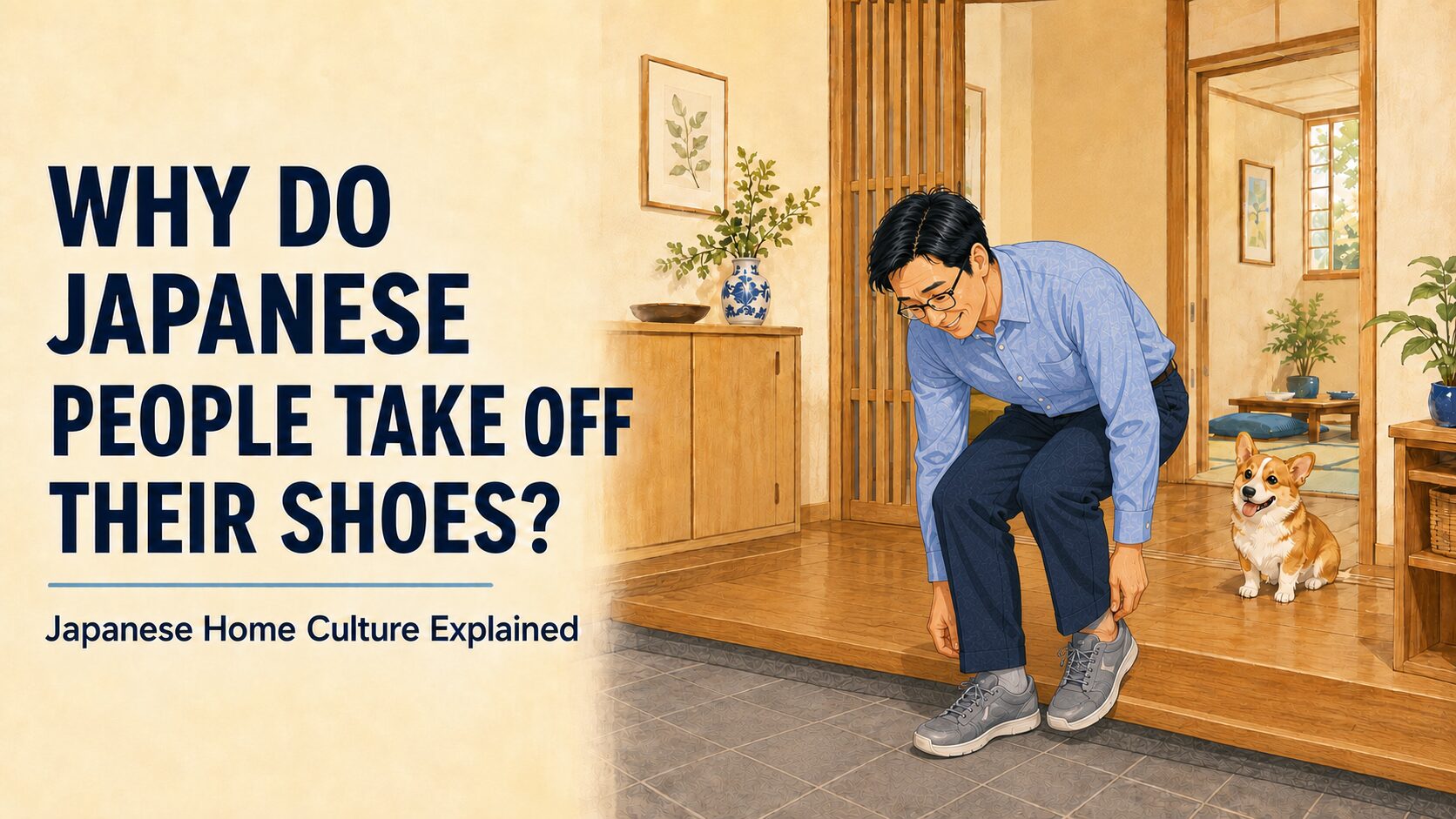
Hello, I’m Hirossy.
In Japan, we normally take off our shoes before entering a home.
The main reason is simple: we do not want to bring dirt from outside into the rooms where we sit, play, sleep, and relax.
For me, this habit feels completely normal. I usually do not think about it.
However, I sometimes notice the difference when I watch movies or TV shows from other countries.
When I was a child, I watched Home Alone. In one scene, Kevin lies down on a bed while still wearing his shoes.
My reaction was immediate:
“Wait… he’s getting on the bed with his shoes on!?”
That scene genuinely shocked me as a child.
In this article, I will explain why people take off their shoes in Japanese homes, how a Japanese entrance works, and what visitors should know about slippers, tatami, and indoor shoes.
Why Do Japanese People Take Off Their Shoes?
Outdoor shoes touch roads, parks, wet ground, dirt, and sand.
If we continue wearing them inside, that dirt comes directly into the house.
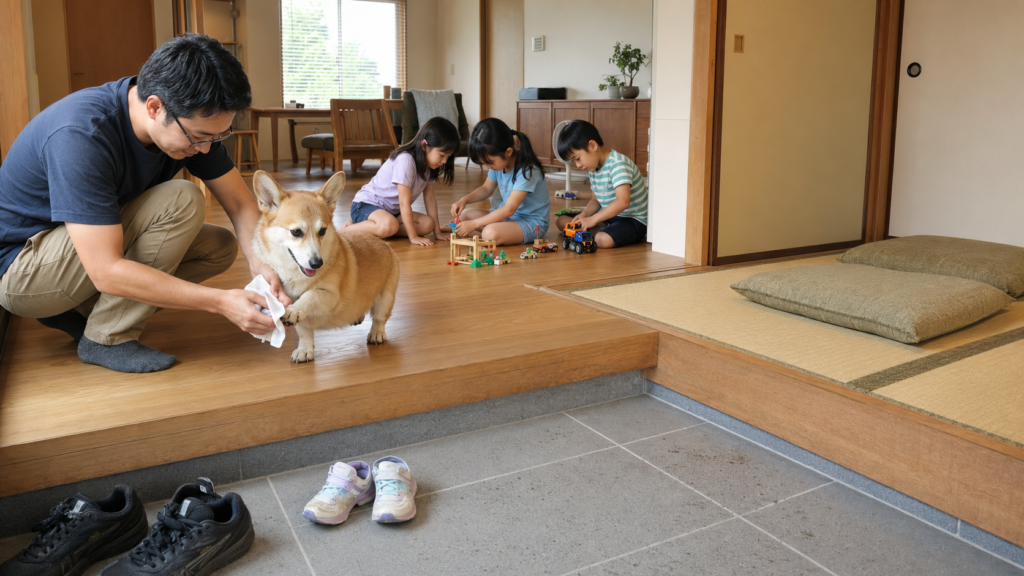
Many modern Japanese homes have wooden floors, but people may still sit, lie down, or play close to the floor. Some homes also have tatami rooms, where families sit on floor cushions called zabuton.
Children may play with toys on the floor or lie down there.
My family does not usually sit directly on the wooden floor, but we still treat the indoor floor as a clean space. We also sit on tatami mats and use zabuton cushions.
For us, outside shoes belong outside.
Even our dog follows a similar rule.
My family has a 2-year-old Corgi. After a walk, we do not let him run straight into the house. First, we wipe his paws with pet-safe wipes.
Of course, he is not wearing shoes. His paws still bring in dust and dirt from outside.
With three children and a Corgi, our home becomes messy quickly anyway. But at least we try not to bring in more dirt from outside than necessary.
What Is a Japanese Genkan?
A genkan is the entrance area found in most Japanese homes.
It works as a boundary between outside and inside.
The lower part of the genkan is where you stand while wearing your outdoor shoes.
The raised floor beyond it is the inside of the home.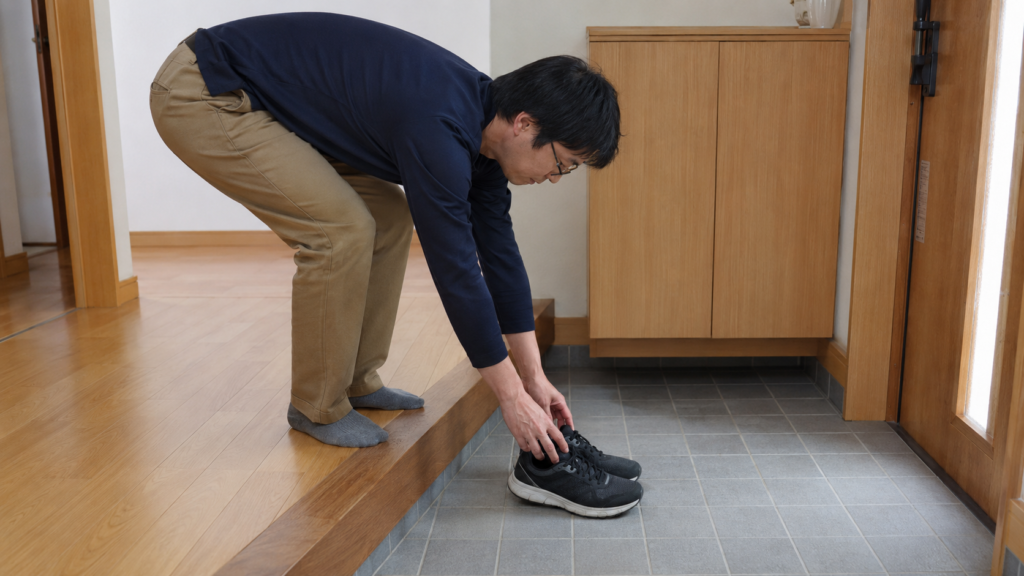
When entering, you normally follow this order:
- Step into the lower genkan area with your shoes on.
- Take off your shoes there.
- Step onto the raised indoor floor without your shoes.
One important point is not to step onto the raised indoor floor while still wearing outdoor shoes.
It is also better not to step back onto the lower genkan floor in your socks or bare feet. That lower area is treated as part of the outside.
After stepping onto the indoor floor, you can turn your shoes around neatly so that they face the exit.
In my home, I tell my children:
“Let’s line up our shoes properly.”
Of course, our genkan is not always neat.
With three children, shoes quickly end up pointing in different directions or blocking the entrance.
Sometimes my oldest daughter notices this and lines up everyone’s shoes.
When I see that, I honestly think:
“Wow, she really does notice these things.”
It is a small thing, but it is one of those everyday habits children gradually learn at home.
Do Japanese People Wear Slippers at Home?
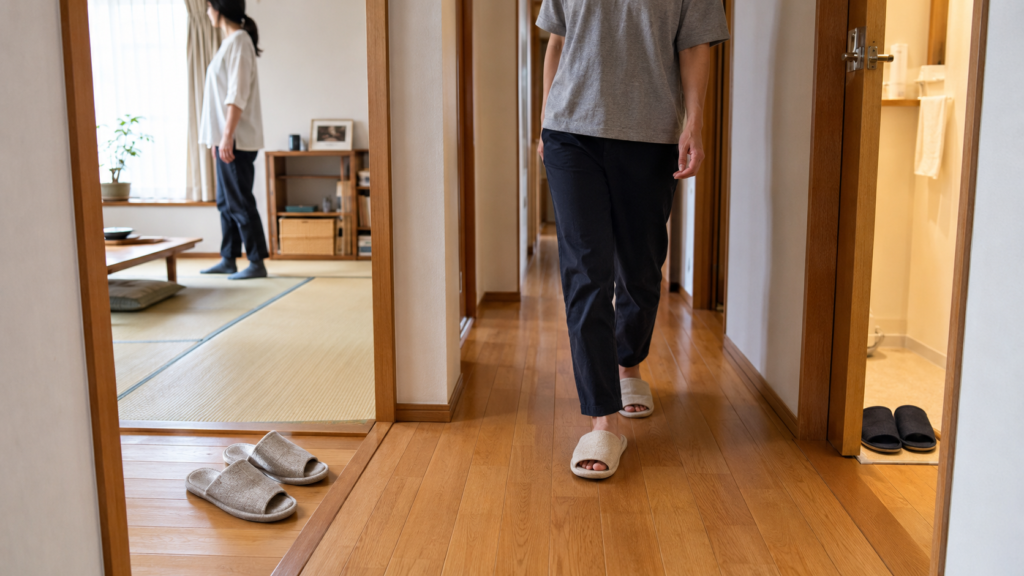
Some Japanese people wear slippers at home, while others wear socks or go barefoot.
It depends on the household, the season, and personal preference.
Taking off outdoor shoes does not always mean that everyone immediately puts on slippers.
Visitors may be offered guest slippers near the entrance. In some homes, however, there may be no slippers at all.
There are also different rules for tatami rooms and toilets.
Regular indoor slippers should be removed before stepping onto tatami mats. On tatami, people normally wear socks or go barefoot.
Some Japanese homes and facilities also keep separate slippers inside the toilet. These are used only in that room.
After leaving the toilet, you should change back into the regular indoor slippers—or remove the toilet slippers if the rest of the home does not use slippers.
Forgetting and walking around the house in toilet slippers is an easy mistake to make.
The basic pattern is:
- Outdoor shoes stay in the genkan.
- Indoor slippers may be worn inside the home.
- Indoor slippers are removed before stepping onto tatami.
- Toilet slippers are used only inside the toilet.
This may sound complicated when written down, but it becomes easier when you look at what other people are doing.
Why Do Japanese Students Change Shoes at School?
At many Japanese schools, students change from outdoor shoes into indoor shoes called uwabaki.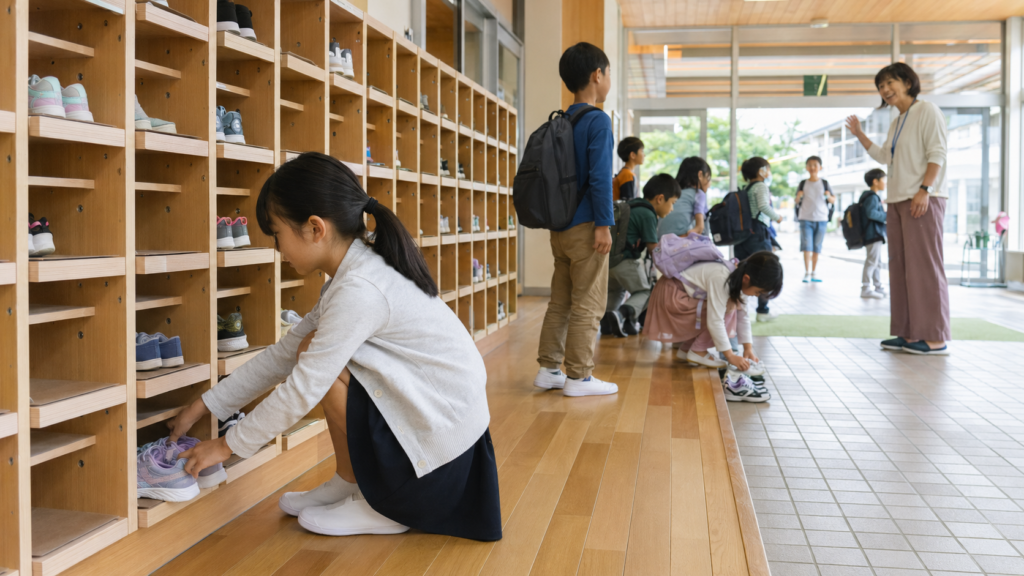
They usually leave their outdoor shoes in shoe lockers near the entrance and wear their uwabaki inside classrooms and hallways.
The idea is similar to the rule at home: keeping outside dirt out of indoor spaces.
However, rules differ by school. Not every school uses exactly the same kind of indoor shoes or follows the same system.
Visitors to a Japanese school may also be asked to remove their outdoor shoes and use guest slippers.
Changing shoes is one of many routines that may surprise visitors about Japanese school life.
Changing shoes is one of many routines that may surprise people from other countries. I explain more about these customs in Japanese School Life.
Where Should Visitors Take Off Their Shoes?
In Japan, you may need to remove your shoes in more places than just someone’s home.
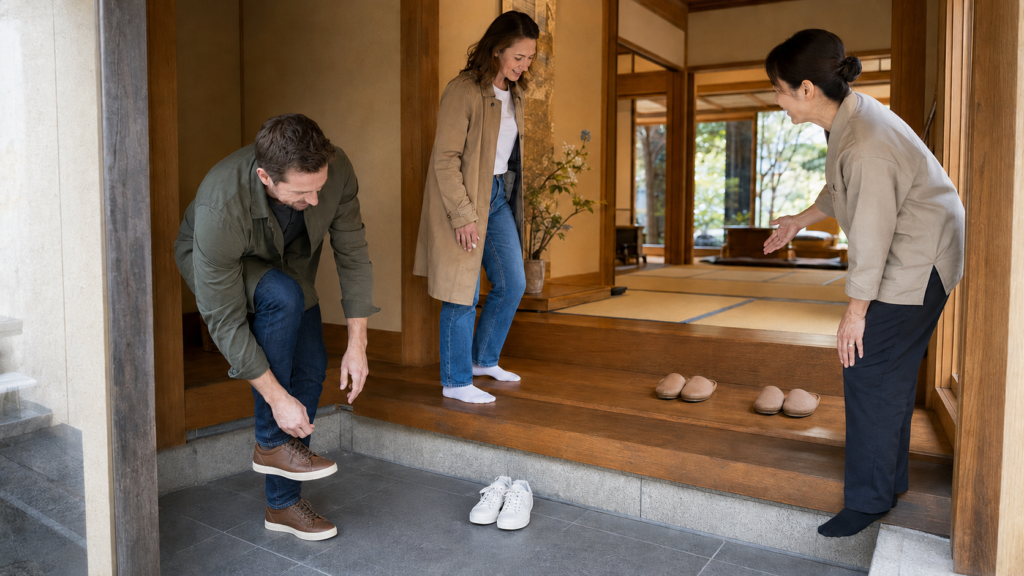
Common examples include:
- Japanese homes
- Some ryokan, or traditional Japanese inns
- Tatami rooms
- Restaurants with tatami seating
- Some schools
- Some clinics, temples, and other facilities
The rules vary, so look at the entrance before walking farther inside.
Ryokan and onsen facilities may also have rules about where to remove your shoes. Before visiting one, you may find Japanese Onsen Etiquette helpful.
Signs that you should remove your shoes include:
- A raised step at the entrance
- Shoes already lined up near the door
- Shoe lockers
- Slippers prepared for visitors
- A tatami floor ahead
You should not step onto tatami while wearing outdoor shoes or indoor slippers.
When you remove your shoes, it is polite to leave them neatly facing the exit. You can step onto the indoor floor first and then turn them around.
Still, you do not need to panic about making every movement perfect.
Even Japanese families have messy entrances. Ours often has children’s shoes scattered around too.
The most important thing is to notice the boundary between the outdoor and indoor areas.
When you are unsure, watch what other people are doing, follow your host, or ask:
“Should I take off my shoes here?”
Taking off your shoes is only one of the small customs visitors may encounter in Japan. You can find more practical advice in Japanese Manners for Tourists.
Taking Off Shoes Feels Normal to Me
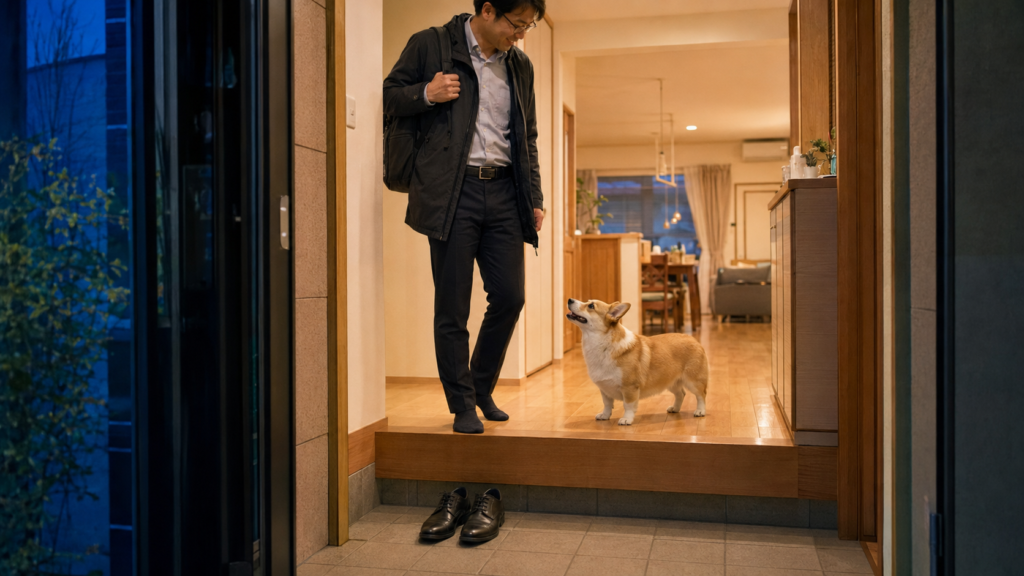
For me, removing my shoes at the entrance does not feel like a special rule.
I come home, take off my shoes in the genkan, and step inside. That is simply the usual order.
This is probably why the scene in Home Alone surprised me so much as a child.
Kevin was relaxing normally in his own home.
But all I could think was:
“He’s still wearing his shoes on the bed.”
That small scene showed me that something completely ordinary in one country can look very strange to someone from another.
If you visit a Japanese home, simply pause at the entrance, look for the raised floor, and follow your host.
You do not need to do everything perfectly.
Comments